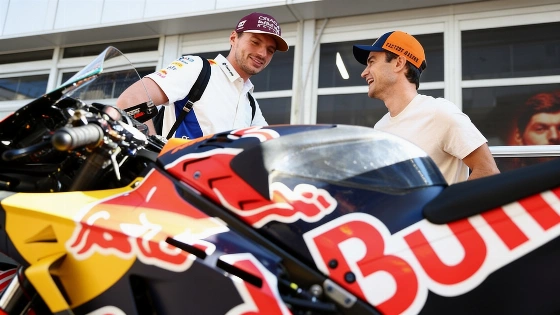
A video shows the former MotoGP rider being carried through Austin in Tesla’s steering-wheel-free two-seat Cybercab. The clip had nearly 300,000 views at the time of the report.
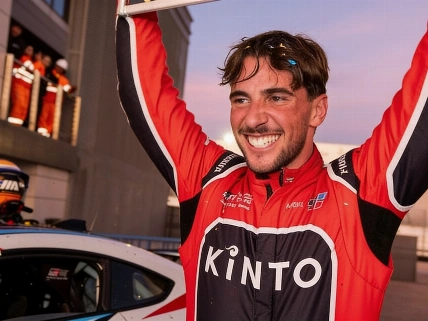
The Tesla Cybercab has neither a steering wheel nor pedals and is built to carry two passengers. A video shows it carrying Dani Pedrosa through Austin, where the former MotoGP rider looked surprised. Pedrosa shared the passenger experience on Instagram during his visit for the Formula 1 United States Grand Prix.
Pedrosa was in the city as a guest of Red Bull at the Circuit of the Americas. He spoke with Max Verstappen and Isack Hadjar, and sat in an F1 car in the garage while it was stationary. The venue was also the subject of RUSSPAIN’s Austin qualifying report.
Tesla presented the Cybercab in October 2024 as a vehicle for fully autonomous passenger transport. Its driverless layout is the defining detail in the clip: passengers have no steering wheel in front of them. EV Global’s technical compilation, based on an EPA filing and rider-guide material, lists a single front motor rated at 163 kW, or about 219 hp. Usable battery capacity is 47.6 kWh, with an estimated range of about 293 miles (471 km). The sensor configuration has eight cameras. The guide describes a two-seat bench with linked seat movement; the backrests recline separately.
The video had nearly 300,000 views at the time of the report. Tesla’s robotaxi service in Austin began accepting paid public rides through its app on September 3, 2026. MARCA reported a fleet of about 460 robotaxis that had travelled more than 3.2 million kilometres. A separate report put operating hours at 6 a.m. to midnight. The service was then available only in Austin.
The National Highway Traffic Safety Administration opened an audit query into Tesla’s self-certification of the Cybercab. The agency is examining how the vehicle was assessed against federal safety standards written for conventional vehicles, including requirements tied to steering and braking controls. The US system relies on manufacturers to self-certify compliance before placing vehicles on public roads. NHTSA has proposed changes to accommodate vehicles without human controls, but the proposal had not been adopted. Reuters reported that Tesla engineering chief Lars Moravy said the company was aiming to get Cybercabs to customers by the end of 2026. Tesla was reported to have an October 30, 2026, deadline to respond to the agency. The service was then available only in Austin; the report does not confirm a launch elsewhere or availability in Spain.