On 12 August 2026, the Moon’s shadow crossed Spain from west to east, briefly transforming daylight into twilight. It moved at approximately 3,700 km/h, and totality lasted no more than 2 minutes 18.2 seconds even at its maximum. The eclipse’s greatest point occurred over the North Atlantic at 17:45:53.8 UT, at 65.225°N, 25.228°W.
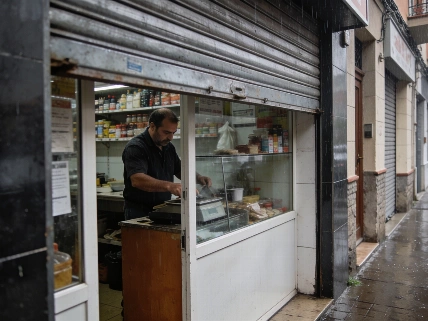
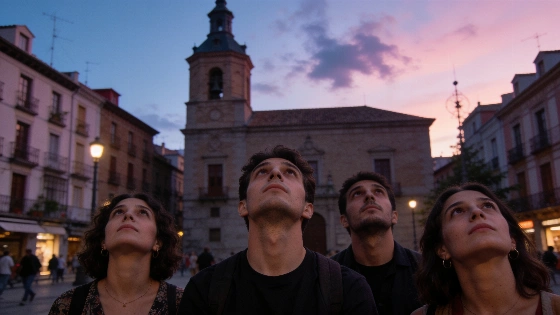
From Galicia to Valencia and from rural villages to major cities, residents and visitors paused to watch the shifting light and capture it on cameras and smartphones. Timing varied by location: reported totality was around 20:28 in León, 20:29 in Zaragoza and 20:32 in Valencia. So, photographs recorded different stages of darkness and changing sky colour across the field.
Information from El País, a curated selection of photographs shows the range of perspectives and settings, while an interactive map lets visitors explore images taken across the country. The project involved contributions from Luis Sevillano Pieres and Alejandro Gallardo, with design by Ruth Benito and information support from Pablo Montalvo, Paola Mendoza, Selva Vargas and Sebastián Casse.
Weather shaped what observers could see, particularly along the Asturias coast, where persistent mist and cloud affected viewing conditions (see how weather affected eclipse viewing in Asturias). The Spanish State Meteorological Agency maintains observation records for the Gijón Campus station, an official reference point for conditions in the region. Even within the eclipse’s path, cloud cover could obscure the event from the ground.
The eclipse also gave scientists an chance to observe the Sun. The Instituto de Astrofísica de Canarias deployed teams and equipment, including in Palencia, to study the solar corona. On 13 August, the institute reported that its corona-measurement instrumentation had been successfully validated there, where thousands of people had watched totality. The institute’s public outreach brought the research to a large audience across the peninsula.
The event is part of an unusual two-year sequence: Spain is due to experience another total solar eclipse on 2 August 2027, although totality will not be visible everywhere in the country. The 2026 photographs preserve the brief change of familiar landscapes and the varied conditions in which people witnessed it. El País offers the full gallery, interactive map and additional resources on its website.