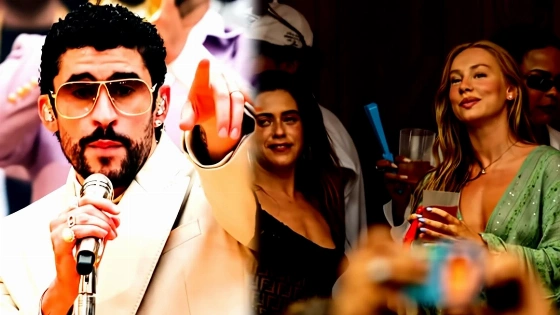
Ester Expósito became the focus of online criticism after footage showed her dancing at the Casita de Bad Bunny during the artist's Madrid concert. Invited to join a select group on stage, she was soon at the center of a broader debate about gender stereotypes and the scrutiny women face in public spaces. The appearance took place during Bad Bunny's ten-show Madrid residency at the Riyadh Air Metropolitano, a run that showed the scale of the artist's presence in the city.
Social media users questioned the selection of guests for the exclusive area, pointing to a pattern in the profiles of the women chosen to participate. Some accused attendees of reinforcing stereotypes, while others targeted Expósito for visibly enjoying the event. The controversy reflects persistent tensions around representation and expectations placed on women in the entertainment industry. Madrid has increasingly hosted multi-date residencies by major Spanish-language artists, including Bad Bunny and Shakira, giving high-profile guest appearances a prominent place in the city's concert conversation.
Expósito has defended her actions, saying her participation was natural and that the deeper issue is society's tendency to judge women's behavior. She argued that criticism of a brief dance reflects misogynistic attitudes and the use of digital platforms to target individuals. She said attention should shift from policing women's enjoyment to challenging the prejudices behind such reactions.
The actress is set to discuss these issues further in an upcoming interview on Henar Álvarez's program, scheduled to air Tuesday on La 1. In a preview, Expósito criticized what she called outdated puritanism and said feminism is compatible with enjoying reggaeton and dancing freely. She also condemned the selective use of feminist rhetoric to restrict women's choices, calling out the hypocrisy of those who dictate how women should behave or what music they should enjoy. RTVE planned to move Álvarez's program back to La 2 from 1 November, with a Sunday 22:00 slot, after just over six months on La 1.
Debates over public judgment and gender roles have also surfaced in Spanish media, including the recent uproar surrounding public punishment and social conflict in the series 'Valle Salvaje'. That controversy also drew attention to the impact of societal expectations on individual behavior. For more on how public scrutiny shapes cultural narratives, see the coverage of tensions in the valley following a bishop's arrival in this related report.
The Casita de Bad Bunny is a stage area reserved for select attendees. It has become a symbol of exclusivity and visibility, while the concerts in Spain regularly attract attention for their high-profile guest lists and the cultural conversations they spark. Public figures such as Ester Expósito often find themselves at the center of debates about gender norms and the influence of digital platforms on reputations and narratives.
The controversy also reflects ongoing challenges in Spanish society around gender equality and freedom of expression. Social media amplifies these debates and shapes public opinion, as discussions about representation and personal autonomy, along with the boundaries of acceptable behavior, continue.