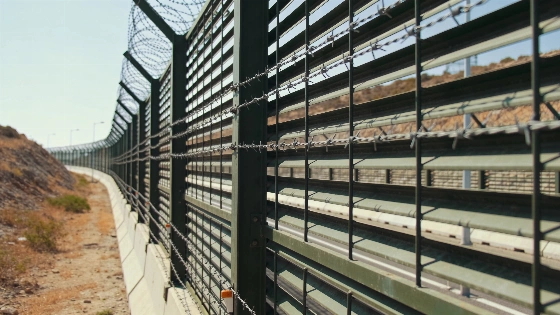
Several EU countries urge Spain and Morocco to accelerate migrant returns after mass crossings in Ceuta. Some governments propose suspending Spain from Schengen. The crisis triggers new border controls and political tension.
Pressure is mounting on Spain after thousands of migrants crossed the border in Ceuta, with several EU capitals demanding immediate action. Brussels and Berlin have called for the rapid return of those who entered Spanish territory illegally, fearing that migrants could move freely across the Schengen area. The European Commission president, Ursula von der Leyen, and German chancellor Friedrich Merz both insisted on urgent repatriations, while Italy, Denmark, and Finland went further, suggesting Spain’s participation in Schengen should be reconsidered.
Von der Leyen described the images from Ceuta as unacceptable and stressed that the EU cannot allow entry without compliance with its rules. She highlighted the need to dismantle trafficking networks and promised additional operational support for Spain, including cooperation with Frontex. However, her statement notably lacked explicit solidarity with Spain, a contrast to the European Council president António Costa, who publicly supported Madrid’s response and underlined the importance of protecting the EU’s external borders.
Calls to suspend Spain from Schengen have intensified the debate. Danish prime minister Mette Fredriksen urged the EU to consider all options, including suspending Schengen cooperation, aligning herself with Italy’s Giorgia Meloni and Finland’s conservative-led government. Meanwhile, Chancellor Merz emphasized the necessity of border protection and welcomed Spain’s intention to prevent illegal migrants from reaching the European mainland. He also called on Morocco to readmit migrants without delay and pressed for immediate enforcement of the EU’s return regulation.
Not all German voices supported the government’s approach. Alice Weidel, leader of the far-right Alternative for Germany (AfD), criticized Merz for not backing Schengen suspension, warning that Germany could become the main destination for migrants. The migration issue remains central in German politics, especially with regional elections approaching in several states.
France responded by reinforcing controls at its border with Spain. President Emmanuel Macron instructed Interior Minister Laurent Núñez to take all necessary measures, including deploying a rapid intervention border force. French authorities are coordinating closely with their Spanish and Moroccan counterparts and have offered further support through Frontex if requested.
Other EU leaders referenced their own border policies. Polish prime minister Donald Tusk pointed to Poland’s tightened asylum laws and border fortifications with Belarus as an example for Spain. Austria’s chancellor Christian Stocker warned that if Spain’s situation leads to increased pressure on Austrian borders, Vienna will act to protect them.
The crisis in Ceuta has revived memories of the 2015 migration wave triggered by the Syrian civil war, which saw hundreds of thousands of refugees arrive in Europe. The political composition of governments across the EU, with several now including or supported by far-right parties, has influenced the tough rhetoric and policy proposals. The Spanish government’s previous regularization of undocumented migrants has also drawn criticism, with some EU partners insisting that no illegal migrant should reach the European continent.
Ceuta, a Spanish enclave in North Africa, has long been a focal point for migration from Morocco and sub-Saharan Africa. While migrants in Ceuta do not have automatic access to mainland Spain or the wider Schengen area, the current crisis has exposed the fragility of border controls and the political divisions within the EU over migration policy. The Schengen Agreement, which allows passport-free travel across much of Europe, includes specific provisions for Spain’s autonomous cities, but the latest events have prompted calls for stricter enforcement and possible exceptions.
According to EU law, member states can temporarily reintroduce border controls in cases of serious threat to public policy or internal security. The debate over Spain’s role in Schengen highlights the ongoing challenge of balancing free movement with effective border management. As the situation develops, cooperation between Spain, Morocco, and EU agencies like Frontex will be crucial in determining the next steps and preventing further escalation.