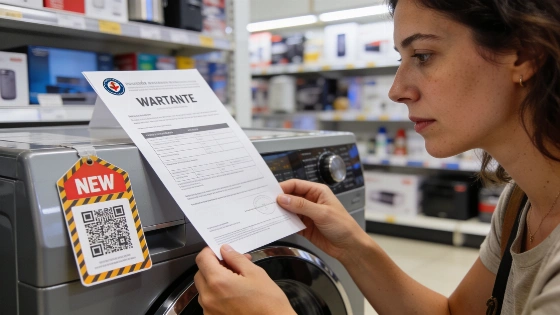
From 27 September 2026, every retailer in Spain, whatever its size or sales channel, must display a new EU warranty notice where customers can see it. Set out in Implementing Regulation (EU) 2025/1960, the measure changes how Spanish retailers present product guarantees. It forms part of a wider EU effort to clarify consumer rights across member countries, information from regional authorities and leading industry sources.
For years, shoppers have been confused by legal and commercial guarantees. Many buy extra coverage without realizing that Spanish law has provided a three-year legal guarantee on new products since January 2022, one year longer than the EU minimum of two years, as regional consumer authorities note. The new EU rule aims to clear up that confusion. Every shop must display a standard notice, at least A4 size in physical stores and in color online, so buyers know their rights if something breaks or does not work as promised. The notice must include a QR code linking to more details about the legal guarantee.
The changes go beyond a sign. The EU GARAN label will appear on some products when the manufacturer offers a free, full guarantee lasting longer than two years. It will not apply to every item: the manufacturer must cover the entire product. The label will show how long the commercial guarantee lasts, identify the brand and model, and provide a QR code with more information. Buyers will be able to see what the law provides and what additional coverage a brand offers. Leading Spanish consumer groups say this should reduce confusion between legal and commercial guarantees.
Most products will not carry the EU GARAN label. Manufacturers decide whether to offer an extended guarantee and must substantiate that offer. By autumn 2026, shoppers browsing Spanish stores or online should be able to see which brands stand behind their products for longer, and which do not. Under the official EU guidelines, the label must be easy to spot beside the product in a store or on its online product page.
The rules apply to both physical and online sales. Retailers must ensure the legal guarantee notice and, where applicable, the EU GARAN label are visible before a purchase. In shops, the label may be placed on the product, its packaging or nearby. Online, it must appear next to the item, and the required information must be shown before checkout, not hidden in general terms and conditions, the European Commission says. The Commission has released official design files and instructions for retailers and manufacturers to follow.
The EU GARAN label does not mean every problem will be fixed throughout the stated period. The manufacturer sets the terms, including what is covered. If the guarantee applies, but, the producer is directly responsible for the full period promised. The EU wants these additional promises to be clear and enforceable, not buried in small print. European consumer protection groups say the reform is intended to make Fundamental Rights easy to find, including the right to have goods repaired or replaced, or to receive a refund. It should also help distinguish those rights from advertising for extra warranties.
The overhaul gives shoppers more power and encourages brands to compete on product longevity as well as price and marketing. For consumers in Spain, the basic point is that every new product already comes with a three-year legal guarantee, whether or not it carries an EU GARAN label. The new system is designed to make that fact clear and show which brands offer more.
By requiring clear, standardized information, the EU hopes buyers will demand longer-lasting goods. Brands may respond with better guarantees. For years, confusion has helped sellers; the new rules put the facts in front of buyers.