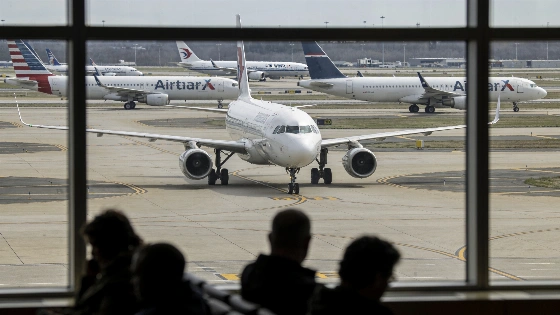
More than 3,000 aircraft were airborne when the Federal Aviation Administration (FAA) ordered a nationwide ground stop at US airports on November 13, 2026, according to figures cited in the report. The agency said on its website that extraordinary circumstances and safety concerns prompted the order. Departures were halted until further notice. Aircraft already airborne were allowed to land.
Transport Secretary Sean Duffy said the stop followed a communications problem affecting all 22 Air Route Traffic Control Centers. These regional facilities manage aircraft travelling between airports, rather than traffic immediately around airport towers. FAA technicians were investigating, he said. Reuters cited FlightAware data showing nearly 7,000 flights delayed or canceled. The report put delays at nearly 8,000 flights and cancellations above 350, with disruption totals continuing to change. International arrivals were to be assessed individually; some could be diverted.
Air Current reported disruptions involving air traffic control frequencies and/or radar capacity. CNN reported that pilots already airborne were using the emergency frequency, a last-resort channel, when normal communications were unavailable or unreliable. The FAA had not identified a confirmed technical cause or cyberattack.
Earlier system failure
The closest comparison cited was January 2023, when a failure in the FAA’s Notice to Air Missions system, known as NOTAM, led the agency to pause departures nationwide. NOTAM carries safety information for pilots and airlines, including runway closures and navigation-equipment outages, as well as other operational restrictions. The outage took almost two hours to fix. A later investigation found that files had been accidentally deleted during database synchronisation. The FAA said it found no evidence of a cyberattack.
The report also described a separate wave of bomb threats against European commercial flights, with alerts affecting routes involving Dublin and Helsinki, as well as Madrid, Copenhagen and Warsaw. RUSSPAIN.COM has covered European flight alerts. The report also noted that the FAA had expanded use of its SMART artificial-intelligence tool for air traffic advice. The agency announced the expansion on November 10, extending SMART from the Washington, D.C., region to the airspace covered by all 22 Air Route Traffic Control Centers. The FAA said the system was separate from the communications problem. No connection between SMART and the ground stop was reported.
The FAA says SMART cost $875 million and helped redirect 180 flights after its introduction in Washington airspace on September 21. During the reported tests, the system saved an average of 10 minutes and nearly 80 gallons of fuel per flight. The cloud-based system uses weather patterns and flight paths, while also factoring in traffic flows and controller-staffing metrics, to forecast demand and recommend schedules, routes and arrival sequencing. Controllers retain the final say on whether to accept its recommendations.