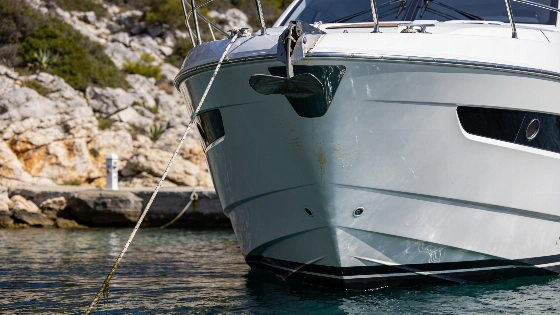
A leisure outing off the coast of Xàbia ended in tragedy on Sunday evening when 35-year-old Mireia died after falling from a large inflatable being towed by a rented yacht and being struck by the vessel. The incident occurred at around 18:45 near La Caleta, approximately 400 metres from shore, in an area known for heavy maritime traffic and secluded coves popular with tourists.
Mireia, originally from Madrid and recently settled in Dénia, where she had opened a café, was spending the weekend with friends. The group had hired a yacht with a licensed skipper to explore the northern Alicante coastline. Their plans included riding a sizable inflatable, commonly called a “donut,” attached to the yacht’s stern for wave-jumping.
Information from initial reports, Mireia lost her balance, possibly because of the swell or the inflatable’s instability, and fell into the water. As the yacht manoeuvred to retrieve her, the crew lost sight of her. The vessel passed over her and caused severe propeller injuries. Despite the rapid intervention of emergency medical teams, she could not be saved.
The Civil Guard from nearby Altea has taken charge of the investigation. The yacht has been secured in port for a review of its documentation and compliance with safety regulations. Early indications point to an accident, with no evidence so far of negligence or technical failure.
Spain’s rules for commercial nautical rentals have also tightened. Under Royal Decree 1188/2025, which took effect on 1 October 2026, operators of rented motor recreational boats shorter than five metres must hold at least a navigation licence or an equivalent qualification. The Directorate General of the Merchant Marine says the measure is intended to “increase maritime safety and prevent incidents and accidents involving boats operated under nautical-rental arrangements.” The requirement concerns qualifications for rental operations; it does not determine liability in this case.
The rules distinguish commercial rentals from private or sporting use. Certain privately or sport-operated motorboats under five metres remain exempt from the licensing requirement, subject to limits that include operating only between sunrise and sunset and staying no more than two nautical miles, about 3.7 kilometres, from the departure port, marina or beach. The exemption also remains for sailing boats shorter than six metres, subject to operating restrictions; jet skis are excluded from the change. A basic navigation licence covers recreational boats up to six metres, with engine power in line with the manufacturer’s specifications.
This fatality is not an isolated case in the region. Last year, a similar accident in Xàbia claimed the life of a 34-year-old woman who fell from the bow of a boat and was also struck by its propeller. In another recent incident in the municipality, a 60-year-old man suffered a foot amputation after a propeller injury. In 2023, journalist and comedian Nerea Pérez de las Heras lost her right leg in a comparable accident in Cala Turqueta, Menorca.
Local authorities in Xàbia have renewed calls for recreational boat users, especially those renting vessels for leisure activities, to exercise greater caution. Municipal sources urge people to follow skippers’ instructions, particularly about leaning overboard or swimming near the hull while engines are running. The recurring incidents highlight the risks of maritime tourism in busy coastal zones.
Spain’s Mediterranean coast, especially areas such as Xàbia, attracts thousands of visitors each year for secluded beaches and water sports. High vessel density alongside recreational activities increases the risk of accidents, particularly when safety protocols are not rigorously followed. The Civil Guard regularly inspects rental boats for compliance, while safety on board also depends on the vigilance of operators and passengers. The latest tragedy has renewed debate over whether safety measures are adequate and the need for greater public awareness of maritime risks.