On August 12, a search on Idealista found 2,674 listings for properties in Spain featuring gardens and barbecues, with prices starting at €45,000. But a closer look at the cheapest options shows that the headline price rarely tells the full story. Among the first results were a vineyard bodega in O Saviñao, Lugo, and a rural house in Montellano, Seville. Both have impressive limitations that could catch buyers off guard.
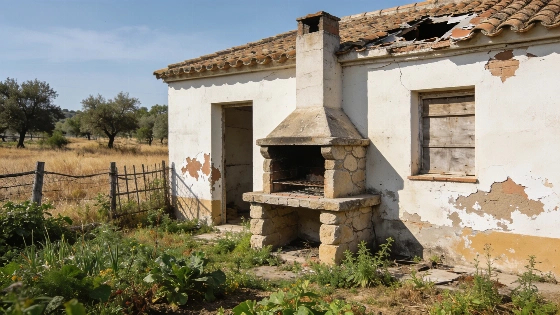
The O Saviñao property is a 30 m² stone bodega with a vineyard and barbecue area, but its official use, habitability and suitability as a basic residence are unclear. The Montellano house offers more space and a 1,000 m² plot, but has no electricity or running water and cannot be mortgaged, information from the listing. These details, often buried in the fine print, make careful checks impressive before an offer. In Spain, owning a rustic plot or building does not by itself establish permission to use it as a home. Planning classification and authorised use matter, and regional exceptions can apply. Idealista News summarises the general rule: living on rustic land is not permitted except in specific cases.
What Do the Cheapest Listings Really Offer?
Properties at the lower end of the price range vary widely in type and condition. Some are rustic fincas; others are village houses or rural chalets. For instance, a €49,900 house in Villahermosa del Campo, Teruel, boasts three bedrooms, a garden and a removable pool, but buyers are advised to verify renovations and installations in person. In Nerpio, Albacete, a €50,900 cortijo includes land and outbuildings, but buyers should confirm the boundaries and legal status of annexes. A €55,000 village house in Pajares de la Lampreana, Zamora, offers four bedrooms and pellet heating, but its roof and energy efficiency need inspection. Even a property in Abanilla, Murcia, priced at €64,900, raises questions about its registered size and expansion permits. A listing’s description does not establish that an extension or outbuilding is registered, authorised or approved for residential use.
These listings are only a sample, not recommendations. Prices, availability and conditions can change, and discrepancies between an ad and the actual property are not uncommon. As Idealista News notes, buyers should not assume that a low price guarantees a move-in-ready home or access to financing and utilities. A useful comparison covers the advertisement and the physical property, as well as land-register records, cadastral information and municipal planning documents.
Why €45,000 Rarely Buys a Move-In Ready Home
The two €45,000 listings illustrate the risks. The O Saviñao bodega is classified as rustic land, raising doubts about its use as a residence. Despite its size, the Montellano house lacks basic utilities and cannot be mortgaged, putting it out of reach for most buyers who need financing. Some listings mention a barbecue area, but that may simply mean there is space to install one, not an existing, functional setup.
Missing services can involve more than arranging a routine connection. Depending on the land’s planning status and infrastructure, bringing in electricity, potable water, sanitation, telecommunications or road access may require large work. Buyers should establish what is already connected and get cost estimates for anything missing before comparing the advertised price with other homes.
Anyone relying on a mortgage should consult their bank and request a valuation before paying a deposit. Lenders may refuse financing if a property's legal status, registration or lack of utilities makes it an insufficient guarantee. A standard residential mortgage may also be unavailable for land, an unregistered building or a self-build project without the necessary permits and documents. Idealista News’ guidance on self-build financing describes a separate construction loan. Requirements can include a registered developable plot, an approved architectural project, a building permit and a contractor’s budget. Talent24h notes that mortgage conditions in 2026 remain strict, especially for unconventional properties.
Beyond financing and legal status, a property’s physical condition can turn a low purchase price into a costly project. A 2026 housing study reported by Idealista News found that 53% of respondents identified at least one habitability problem in their home. Poor insulation causing excessive cold or heat was reported by 26%; noise accounted for 18%, while damp was reported by 16%. One in four people who needed improvements said they could not afford them. For rural buyers, those findings underline the value of checking the roof and insulation, as well as moisture, heating and energy performance, before committing.
Impressive Checks Before Signing
The General Council of Notaries recommends seeking professional advice before signing any private contract. A deposit agreement (arras) is binding, and buyers risk losing their money if the deal falls through for reasons attributable to them. At a minimum, buyers should:
- Request an updated land registry extract, known in Spain as a nota simple, to confirm ownership and check for mortgages, liens or other restrictions.
- Compare the registry, deed, cadastral records and physical property to ensure they all match. The Catastro can help check the recorded area and boundaries. The land-register entry can show whether a dwelling is recorded and identify registered charges.
- Verify the permitted use and urban planning status with the local council, especially for rustic or non-standard properties. Check separately whether the house, annexes and extensions are registered and authorised.
- Check the status of utilities and access, including electricity, water, sewage, wells and road connections, and budget for any missing infrastructure.
- Clarify the deposit contract's terms, including price, deadlines, pending documents and what happens if financing is denied.
- Order a technical inspection to assess the roof, structure, drainage and outdoor installations, as repairs can be costly.
Regional rules can make a material difference. In Galicia, for example, Article 52 of the regional land regulations provides for certain homes linked to agricultural activity. Buyers should so confirm the rules that apply to the specific municipality and plot rather than assume that a general description of rural property settles whether residential use is allowed.
The Real Cost: Beyond the Asking Price
The advertised price is only the starting point. Buyers must also pay property transfer tax, which varies by region, along with registration fees and notary costs. Agency or management fees may apply too. Additional expenses may include property valuation, technical advice and necessary renovations. For homes with gardens, ongoing costs such as irrigation, pruning and maintenance can add up quickly. In cases like Montellano, installing electricity and securing water access could cost more than the initial savings.
Financing and any public assistance should be assessed separately from the property’s legal status and total cost. Idealista News’ account of Spain’s 2026-2030 state housing plan describes potential support of up to €15,000 for people under 35 buying or building a first home in municipalities with up to 10,000 inhabitants. That amount could rise to €20,000 in municipalities losing population. Eligibility depends on conditions including regional implementation and income limits; assistance does not replace financing or a renovation budget.
A €45,000 property without utilities or mortgage options may ultimately require more investment than a slightly more expensive home with working installations. Before making an offer, buyers should calculate all taxes and fees, along with connection costs and renovation expenses. They should also account for the savings banks require for mortgage approval.