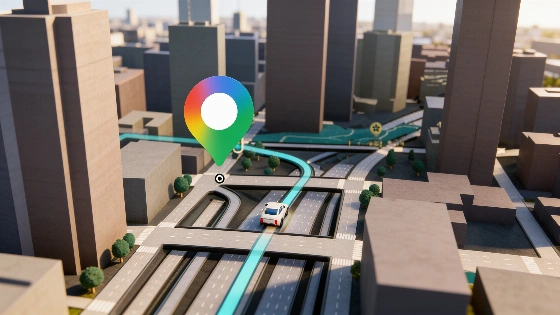
Google Maps is gradually rolling out Immersive Navigation, a redesign of its in-car driving interface that adds a more detailed three-dimensional view of the road. Announced in March, the update is intended for Android Auto and Apple CarPlay, though features are reaching users in phases and availability can vary by platform and device.
The new view brings road features into sharper focus, including 3D buildings, overpasses, crosswalks, traffic lanes, traffic lights and stop signs. It also offers clearer guidance for upcoming turns, plus route previews and information to help drivers compare alternatives. The goal is to give drivers more context during a journey, not simply change the map’s appearance.
The visual redesign is separate from Gemini, Google’s conversational assistant in Maps. By voice, Gemini can handle navigation requests such as finding an alternate route, locating a place to refuel, adding a stop or reporting a traffic incident. Its conversational functions form a separate layer from Immersive Navigation, and their availability does not mean every visual feature is active on every vehicle or account.
Google Maps’ Gemini navigation experience reached Android Auto before CarPlay. The CarPlay rollout began in the United States on October 21, 2026, with international availability expanding afterward. Drivers can access Gemini from the vehicle display, but platform rollouts and feature sets may differ.
Gradual Rollout and Platform Availability
Immersive Navigation is rolling out gradually, not arriving for all drivers at once. Its in-car focus reflects a redesign that combines a richer road view with turn guidance, route comparisons and arrival information. Having Gemini or one part of the visual redesign does not, on its own, mean every related feature is available on a particular Android Auto or CarPlay system.
For drivers in Spain and elsewhere in Europe, the practical impact will depend on when the relevant features reach their platform and device. Google is developing both a more detailed navigation display and a voice-based assistant for route-related tasks, while rolling out those capabilities separately.
As these tools reach more users, they put greater emphasis on the car’s basic display for navigation and travel decisions. Immersive Navigation provides visual road context; Gemini adds conversational assistance. Together, they point toward a more information-rich in-car Maps experience, though they remain separate features and are not arriving simultaneously.