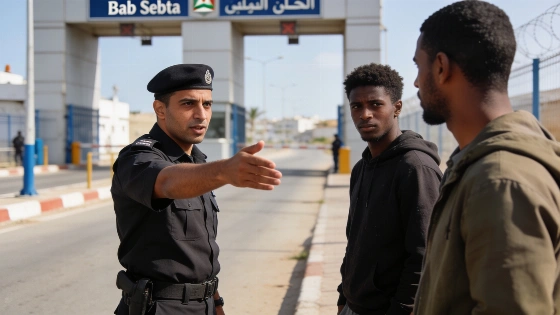
The CNI's warning to Morocco on 29 July described two large groups urging an attempt to enter Ceuta on social media. One was named «Asalto a la valla de Ceuta». The alert went to Morocco's domestic intelligence service, the DGST, and its foreign intelligence service, the DGED. The CNI's account of the influx also cited online messages and a mistaken belief that border restrictions had been relaxed.
That same evening, the two senior officers leading the Guardia Civil's Information Headquarters had dinner at a Marbella hotel with Abdellatif Hammouchi, head of the DGST. Jürgen Ebner, Europol's executive director, was also there. EL ESPAÑOL reported the meeting, citing senior figures in the Guardia Civil and National Police. Police officers had been invited but declined.
The Guardia Civil officers were Brigadier General Luis Peláez, head of the Information Headquarters, and Colonel Francisco José Vázquez Aznárez, known as Pape, its deputy chief and head of intelligence. The gathering took place one day before the mass assault on Ceuta, on 30 and 31 July.
EL ESPAÑOL reported that around 100,000 people were preparing near the border to enter the city. Estimates of the influx varied: a police-linked figure put the number at about 125,000, while the government estimate was 72,000. Other reports cited roughly 70,000 or 80,000. The newspaper also cited government-declassified documents indicating that the CNI alerted Moroccan services on 29 July to preparations for an attempted mass entry the following day. The reported attempts involved both the land border and swimming around the maritime barrier. The account does not establish what was discussed over dinner.
In a written response to judge María Tardón, the CNI said Morocco had been aware in the days before the entry that an unusual situation was developing, with possible irregular crossings. The agency considered both the DGST and DGED aware of the potential entry's scale and timing from 29 July, regardless of what information they had gathered themselves. The National Court investigation led by Tardón is examining whether the episode was spontaneous or organized, including what warnings were received before the crossings.
Official Guardia Civil sources told EL ESPAÑOL that its international terrorism information service meets counterparts from other countries several times a year, including Morocco's. They also said Hammouchi spends about a month in Marbella each summer. The Guardia Civil declined to say whether the CNI alert was repeated at the 29 July meeting. It said the content of such meetings is not usually disclosed.
The meeting also comes amid allegations about how the Guardia Civil documented the Ceuta operation. EL ESPAÑOL reported in September that Peláez and Vázquez Aznárez instructed the team preparing an internal report to leave out any reference to Morocco and its role. Sources from the unit said they witnessed the two officers give that instruction at a meeting in late August.
The account followed EL ESPAÑOL's publication of an initial report by the National Police's CENIF. It described Moroccan gendarmes, in uniform and civilian clothes, actively guiding people who entered Ceuta via the Tarajal breakwater. According to sources cited by the newspaper, Peláez said the Guardia Civil would not follow the National Police's approach. Its report to the judge, he said, would say nothing about Morocco's responsibility.
Police investigators have also examined how thousands of apparently identical inflatable flotation rings used during the attempts to cross were distributed, including whether they were bought in bulk and handed out along the coast. The CNI reportedly assessed that it had found no evidence Moroccan authorities planned the influx, while the police inquiry continued to examine the equipment and its supply. The court's investigation also covers whether intelligence warnings reached the relevant Spanish authorities. Testimony from the Spanish consul in Tetouan and former officials connected to Ceuta's government delegation has addressed the pre-crossing warnings.
For readers following the related military record, RUSSPAIN has also covered the classified deployment file, which cites Defence instructions after the Ceuta crisis. Separately, Voz Pópuli reported that Peláez travelled to Rabat a month before the mass entry to award decorations to seven senior Moroccan intelligence officials. At that event, he described Morocco as an indispensable strategic partner for counter-terrorism and irregular migration, while also citing organised crime.