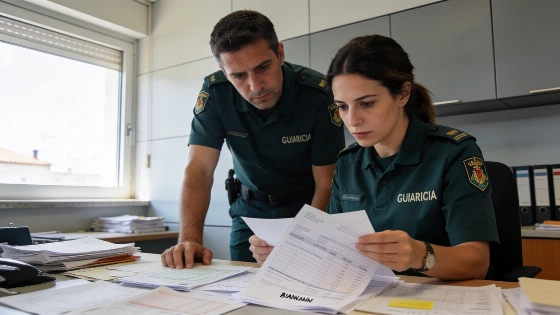
Investigators are tracking financial flows tied to the Leire Díez case. Dozens of accounts, including those linked to PSOE, are under review. The probe aims to clarify who financed the alleged scheme and how funds were moved.
The investigation into the so-called Leire Díez case has intensified, with the Unidad Central Operativa (UCO) of the Guardia Civil and Anticorruption prosecutors Elisa Lamelas and Mar Scharfhausen focusing on the financial trail behind the alleged plot. Backed by the Audiencia Nacional, authorities are examining dozens of bank accounts to identify the ultimate financiers of a network suspected of seeking to influence judicial proceedings involving the PSOE and the government of Pedro Sánchez.
Recent findings point to suspicious transfers of thousands of euros among those implicated in the case, including payments originating from the party itself. However, investigators believe that several transactions remain unexplained. In a report dated July 21 and submitted to Judge Santiago Pedraz, prosecutors detailed how the criminal organization allegedly used individuals and companies as fronts to disguise and conceal payments, prompting a review of 81 bank accounts. Most of these accounts are linked to Gaspar Zarrías, former vice president of the Junta de Andalucía, and lawyers Ismael Oliver and Jacobo Teijelo, who are suspected of channeling funds to Leire Díez. Six accounts belonging to the PSOE are also under scrutiny.
The main objective is to determine who ultimately financed the activities attributed to Leire Díez and to clarify the involvement of other suspects. The investigation is expected to gain momentum in September, after the August judicial recess. Judge Pedraz has scheduled the questioning of Ana María Fuentes, the PSOE’s manager, for September 9. She is accused of issuing false invoices to justify payments that allegedly ended up with Leire Díez. Whether the inquiry will reach higher levels within the party remains to be seen.
While the PSOE is not currently charged as a legal entity, the Partido Popular (PP), leading the private prosecution, has publicly suggested that the party could face charges. PP president Alberto Núñez Feijóo has questioned how the PSOE covered expenses related to alleged operations targeting prosecutors, judges, journalists, and the UCO, raising doubts about the party’s financial practices.
On May 27, the Audiencia Nacional expanded the investigation to include Leire Díez, Santos Cerdán, Gaspar Zarrías, businessman Javier Pérez Dolset, and lawyers Ismael Oliver and Jacobo Teijelo. Judge Pedraz concluded that there are indications of a scheme designed to shield those involved and act as a protective umbrella against judicial cases that could affect the government and the PSOE. The case file describes a dual strategy: seeking compromising information on officials involved in sensitive investigations and attempting to trigger internal probes within the Guardia Civil to create an atmosphere of intimidation.
Prosecutors and UCO agents have identified Santos Cerdán, former Organization Secretary of the PSOE, as a key figure. According to the July 21 report, Cerdán allegedly tasked Leire Díez in April 2024 with coordinating actions aimed at systematically disrupting any judicial or police proceedings that might impact the party or the government. The prosecutors argue that, through Cerdán, the PSOE provided logistical and financial support to the group.
The party’s current leadership has distanced itself from the case, attributing any potential responsibility solely to Cerdán. Nevertheless, investigators continue to follow the money trail, seeking to verify the origin and destination of funds and to uncover any additional suspicious payments.
Evidence gathered by Anticorruption and the UCO suggests that funds were funneled from the PSOE to Leire Díez. This includes four monthly payments of €4,000 to Díez via a company owned by Gaspar Zarrías, and a further €27,225 through two intermediary firms linked to lawyer Ismael Oliver. Prosecutors also highlight that Jacobo Teijelo issued and received three invoices from the party totaling €125,000 for services he allegedly did not provide. The theory is that part of this money was intended for Díez, with Teijelo acting as a conduit for continued payments after Zarrías withdrew from the role when the scheme became public.
Sources close to Leire Díez deny that she received payments from the PSOE through intermediaries. During his testimony in June, Teijelo rejected any wrongdoing, stating that he was hired to assess the viability of legal cases for the party. However, prosecutors remain unconvinced, noting that the PSOE has officially denied contracting Teijelo or receiving any professional services from him. In July 2025, the party sent a formal notice refusing to pay two additional invoices worth €53,000, citing a lack of evidence for the services rendered.
Anticorruption authorities also suspect that the network attempted to covertly finance the legal defenses of former minister José Luis Ábalos and Koldo García. Prosecutors point to messages suggesting that payments were to be made through other professionals, possibly including Teijelo. Additionally, documents indicate that the group considered offering up to €300,000 to bribe a prosecutor and allegedly proposed €250,000 to businesswoman Carmen Pano to alter her testimony in the Koldo case, where she claimed to have delivered cash-filled bags to the PSOE headquarters.
This case highlights the growing scrutiny of political party finances in Spain. The investigation into the Leire Díez network is part of a broader trend of judicial oversight, as seen in other high-profile cases involving political figures and alleged corruption. For context, recent actions by Spanish authorities against organized criminal groups, such as the dismantling of migrant smuggling rings between Ceuta and Andalusia, demonstrate the ongoing efforts to address complex financial and legal schemes. More details on these operations can be found in reports like the recent crackdown on human trafficking networks.
As the investigation progresses, the outcome could have significant implications for party accountability and the transparency of political funding in Spain. The case continues to attract attention as authorities work to clarify the full extent of the alleged scheme and its impact on the country’s political landscape.