When Antoni Gaudí died in June 1926, aged 73, his estate included a house in Park Güell and just over 3,000 pesetas held in two bank accounts. The inventory, signed in Barcelona in November 1926 before notary Lluís Rufasta, records balances of 1,870.08 pesetas at the Banco de España’s Barcelona branch and 1,121.54 pesetas in a Caixa de Pensions savings account, for a total of 2,992.62 pesetas. The Park Güell house was valued at 45,000 pesetas. On the centenary of the inventory’s signing, the Arxiu Històric de Protocols de Barcelona has made the document publicly consultable.
A family divided
In Ione Hernández Sáenz’s first fiction feature, “Hermanas”, one sister’s son is accused of sexually assaulting the other sister’s daughter. Emma Suárez and Elena Anaya star in a story about the fracture that follows when an accusation reaches the closest circle of a family. The film is Hernández Sáenz’s feature debut and is scheduled to open on 27 November 2026.
The film takes up the silences, guilt and prejudices surrounding sexual violence ahead of 25N, the International Day for the Elimination of Violence against Women, marked on 25 November. A separate Málaga court ruling concerns a conviction for continued sexual assault that the Provincial Court upheld.
Books and exhibitions
David Szalay’s “La carne”, winner of the 2025 Booker Prize, has arrived in Spain. Its taciturn male protagonist becomes a lens on social contradictions, as the novel moves through the body, desire, money, chance and violence beneath ordinary life. In the comics segment, Javi Alonso of Radio 3’s “Territorio 9” introduces “Eslabón débil”, the debut graphic novel by Jordi Giol, winner of the Premio Internacional de Novela Gráfica Fnac-Salamandra Graphic. Its central character, Teresa, is a widowed woman in her seventies struggling to pay rent on an insufficient pension.
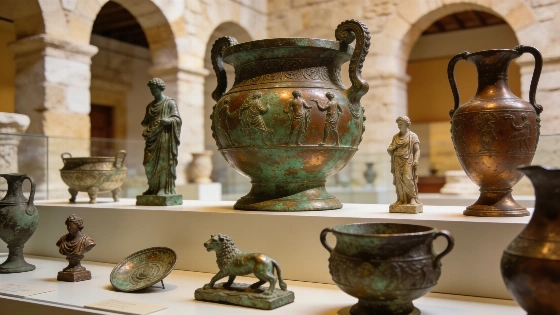
In Paris, “Los secretos de la Alhambra” recreates the architecture and artistic features of the landmark in an immersive exhibition. The Museo Nacional de Arte Romano in Mérida brings together nearly 500 bronze objects from more than 30 museums across the Iberian Peninsula for “A la sombra de Vulcano”, tracing the metal’s history from pre-Roman times to the Renaissance.
Music and stage
The cajón became a regular instrument in flamenco after Brazilian musician Rubem Dantas introduced it alongside Paco de Lucía. Palmas, zapateado and guitar had previously carried much of the rhythm; Dantas’s contribution helped change that sound. He is marking 50 years since the instrument’s introduction with a commemorative tour.
Musicologist Enrique Mejías, director of the Archivo SGAE, revisits the musical “Chicago”. First staged in 1975, it returned in a semi-staged version in 1996 and went on to become a Broadway success. In 2026, the New York production marks 30 uninterrupted years on stage; the musical also inspired Rob Marshall’s film adaptation.
The 1926 inventory reproduces a copy of Gaudí’s will, made in Puigcerdà in 1911; the original was destroyed in 1936 during the Spanish Civil War. His stated wish was for his assets to support construction of the Sagrada Família, with the Park Güell house to be sold and the cash applied to the basilica. The inventory also includes a certificate of last wills signed by Manuel Azaña, then a justice official who later became president of the Second Spanish Republic.