Surge of Chinese Investment in Morocco's Auto Industry Raises Concerns in the EU. Chinese companies are rapidly setting up electric vehicle and component manufacturing operations in Morocco. The EU fears this could enable circumvention of European tariffs. The new export route is already impacting the market and regulations.
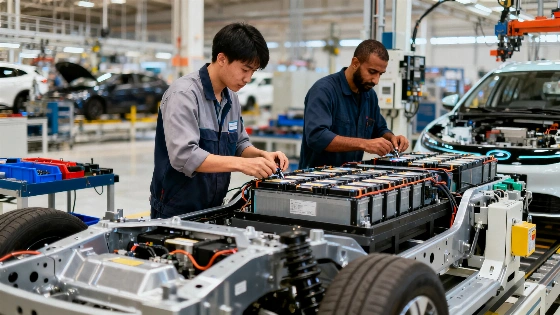
Chinese automakers are rapidly expanding their presence in Morocco, turning the country into a key industrial hub for exporting electric vehicles to Europe. In recent years, dozens of new enterprises have emerged in the Tangier and Kenitra regions, producing not only cars but also components for batteries, electronics, and tires. This shift in logistics and manufacturing is already causing concern in Brussels: the European Union fears that Chinese goods could enter the European market via Morocco with minimal tariffs.
According to the Financial Times, European authorities are interested not only in the pace of investment but also in the structure of new supply chains. Chinese companies are taking advantage of Morocco’s free trade agreements with the EU and the US, as well as low costs and access to renewable energy. This allows them to reduce production costs and bypass some of the restrictions imposed on direct imports from China.
In recent months, the European Commission has recorded cases where parts and materials produced with Chinese capital are being classified as Moroccan goods and benefit from trade preferences. As a result, it is becoming increasingly difficult to tell where genuine local production ends and schemes for circumventing European barriers begin. The more complicated the supply structure becomes, the harder it is to control the origin of goods and apply protective measures.
Morocco, in turn, is gaining significant economic benefits: new jobs, infrastructure development, and export growth. For China, this is an opportunity to get closer to European markets and reduce logistics and trade risks. Essentially, Beijing is leveraging Morocco's geographic location to minimize the impact of European tariffs and speed up deliveries to the EU. This approach allows Chinese companies to remain competitive even as trade rules tighten.
The situation in North Africa reflects a broader economic conflict between China and the European Union. The EU is trying to protect its industry from an influx of cheap electric vehicles, while China is seeking new avenues for expansion. For Spain and other Southern European countries, this means increased market competition and possible changes to import regulations. According to the European Commission, Morocco could become one of the EU’s five largest car suppliers by 2025. The country is home to the region’s largest port—Tanger-Med—which has already surpassed many European ports in cargo turnover. Morocco has free trade agreements with the EU, the US, and several African countries, making it an attractive platform for global manufacturers.