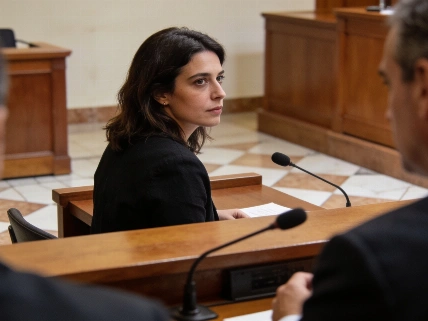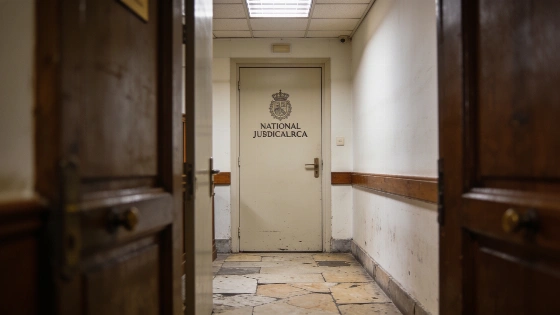
Spain’s National Court judge Antonio Piña has proposed sending four former ETA leaders to trial over the 2002 Santa Pola bombing. The attack killed two people, including a six-year-old girl, and injured more than 50; six former leaders are now facing prosecution.
The two men convicted of carrying out the Santa Pola bombing were sentenced to 843 years in prison in 2012. More than two decades after the attack, a judge at Spain’s National Court has proposed putting four former ETA leaders on trial over their alleged roles.
Judge Antonio Piña’s proposal concerns the 4 August 2002 bombing of the Guardia Civil barracks in Santa Pola, Alicante. It killed two people, including a six-year-old girl, and injured more than 50. The four newly processed defendants are Juan Antonio Olarra Guridi, alias Jokin, and Ainhoa Múgica Goñi, Olga. They are joined by María Soledad Iparraguirre Guenechea, Anboto, and Félix Ignacio Esparza Luri, Navarro.
All four face charges over the deaths and injuries, as well as terrorist damage. Six former ETA leaders are now processed in the case. Mikel Albisu Iriarte, Antza, and Ramon Sagarzazu Gaztelumendi, Ramontxo, were processed in August 2024. Both are at liberty.
The case was reopened in March 2022 after a complaint by victims’ association Dignidad y Justicia. The association has sought to establish whether former leaders can be held responsible for attacks carried out by subordinates because of their control over ETA. The two material perpetrators, Óscar Celarain and Andoni Otegi, were already convicted.
Piña’s decision cites police reports and statements he took from the four defendants in June. The material reviewed by the judge places all six men and women in ETA’s zuba, its leadership, at the time of the bombing. Police reports say those leadership structures provided equipment for the attack.
The items identified included a stolen vehicle used as a car bomb and false number plates. The reports also refer to explosives. They say the materials were prepared in France before being delivered to the Argala command, which carried out the attack.
Olarra and Múgica are described as leaders of ETA’s military apparatus, known internally as Otsagi. It coordinated and supplied operational commands. The judge says their structure provided the vehicle already prepared for use in the bombing.
Esparza is identified as the head of the logistics apparatus, Lohi. That unit handled the organisation’s material resources, including stolen vehicles and explosives. Piña says there are indications Esparza’s role extended to the Santa Pola attack.
Iparraguirre is placed at the head of ETA’s financial apparatus, Diba. The judge says there are indications she helped fund and sustain the structures involved. She is the partner of Mikel Antza, previously identified as head of ETA’s political apparatus. Ramontxo led its international apparatus, which supported members who had fled abroad and maintained relations with allied organisations.
Three of the four newly processed defendants, Olarra, Múgica and Esparza, are in semi-release under Article 100.2 of the Prison Regulations, applied by the Basque government. Iparraguirre has also been granted the measure, but the Prosecutor’s Office has appealed and the National Court has yet to rule. The proposal to send the four to trial is not itself a conviction.
The procedural distinction matters in Spanish court cases: in a separate Madrid matter, judges declined to order an immediate eviction at Puerta del Sol while awaiting a government response, as the Sol camp case reported. The Santa Pola investigation is one of 10 ETA attack cases reopened in recent years, involving more than 20 former leaders.