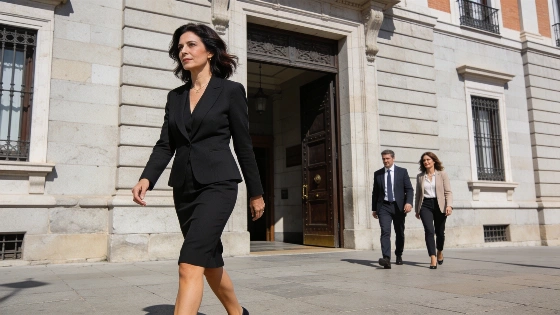
José Luis Rodríguez Zapatero, Spain’s former prime minister, continues to face criminal charges in the Plus Ultra case after a three-hour interrogation at the Audiencia Nacional. Judge José Luis Calama, who is leading the investigation at the National Court, decided to maintain Zapatero’s status as an accused person, citing four distinct strands of evidence that, in the court’s view, justify continuing the investigation. Proceedings remain at the instruction stage, and the allegations have not been established at trial.
The case centers on the €53 million rescue granted to Plus Ultra in March 2021 through the state industrial holding company SEPI during the COVID-19 crisis. Investigators are examining whether the aid was connected to alleged influence-peddling and money laundering, as well as falsified documents or the use of intermediary companies. During the hearing, Zapatero answered only the judge and his own lawyer, declining to respond to the Anti-Corruption Prosecutor’s Office, which opened the investigation in January 2025. The judge reportedly asked whether defendants had received a large payment from Plus Ultra in exchange for influence with SEPI officials or others in the administration.
Information from sources close to Zapatero, Calama pressed him on unresolved aspects of the case, including the origins of a Dubai-based company allegedly linked to the movement of funds through a commission involving businessman Julio Martínez Martínez. A 1% commission on the €53 million rescue would amount to €530,000, although reports say payments routed through different Plus Ultra companies to Martínez allegedly exceeded that figure. Zapatero reportedly said he was willing to cooperate, including by authorizing access to his international banking records and assets.
In a written decision after the session, Calama said Zapatero’s testimony had not dispelled what the court called “rational indications of criminality.” The court rejected the prosecution’s request to seize Zapatero’s passport or restrict his travel, but found sufficient grounds to keep him under investigation. The judge cited four basic pieces of evidence. None amounts to a final finding of guilt at this stage.
The first is the seizure of electronic devices from Plus Ultra executives and associates in December 2025. Police extracted messages that investigators interpret as suggesting a network of influence aimed at securing government aid for the airline. Zapatero appears in some communications, but denies involvement or pressure over the bailout. He has said his relationship with Plus Ultra was limited to knowing its current president, Julio Martínez Sola.
The second strand concerns the traceability and purpose of financial transfers. Investigators have linked movements in Zapatero’s bank accounts to funds allegedly originating from the public aid and routed through various companies. The court says Zapatero received nearly half a million euros from relevant analysis over five years, alongside additional payments to his daughters’ company and links to firms associated with Venezuelan businessmen. Zapatero says the payments were legitimate consultancy fees, consistent with his professional background and his daughters’ work in communications. In separate reported testimony, Martínez Sola said Plus Ultra had paid a 1% commission despite being unable to identify a specific action by Zapatero within SEPI. He explained that the payment was made “in case there was doubt.” Investigators are examining the purpose and route of the payments, not treating the percentage alone as proof of a crime.
The third piece of evidence is data from a mobile phone belonging to Rodolfo Reyes, Plus Ultra’s former owner. U.S. authorities obtained the data in 2021 and handed it to Spanish police in 2026. Messages on the device refer to Zapatero’s alleged mediation in the airline’s affairs. His defense disputes the legality and chain of custody of the material and has requested further details from U.S. authorities. The messages remain part of the investigative record, not a judicial finding that the alleged mediation took place.
The fourth and most recent finding is the discovery of jewelry valued at €1.3 million in Zapatero’s Madrid office during a police search in May. The origin of the items and their tax status remain under examination, prompting the judge to add allegations of smuggling and tax fraud. Zapatero’s legal team has requested more time to provide documentation, citing the involvement of Arab countries and the difficulty of tracing the assets.
Another line of inquiry concerns Plus Ultra’s eligibility for the SEPI rescue. Prosecutors have examined the postponement or regularization of the airline’s debt with Spain’s Treasury General of Social Security, since companies seeking the aid were required to be up to date with their Social Security and tax obligations. A prosecutor’s report attributed to Julián Salto said resolving the issue allegedly enabled Plus Ultra to meet a condition for receiving public support. A related inquiry into whether Zapatero sought to influence former minister José Luis Escrivá was transferred to Calama because of its alleged connection to the basic rescue case. These matters remain under investigation, and no court has determined them.
The investigation is expected to continue, with further witness testimony and additional hearings for Zapatero possible, particularly over the jewelry-related allegations. The court is also considering a request to clarify how U.S. authorities obtained and transferred the phone data. Zapatero’s defense sees that inquiry as a possible basis for challenging the evidence.
The Audiencia Nacional is Spain’s high court for complex cases, including major financial and political investigations. Reporting has identified alleged offenses in the Plus Ultra inquiry, including criminal organization and influence-peddling, along with money laundering and document falsification. Investigators are also examining the possible use of intermediary companies and consulting arrangements. The affair has drawn impressive attention because Zapatero is the first former prime minister to be formally charged in a criminal investigation. Separately, ABC reported in October 2026 that Plus Ultra was seeking a buyer amid severe financial pressure. As of 2026, the case remains open, no trial date has been set, and the allegations remain subject to investigation and subsequent court proceedings.