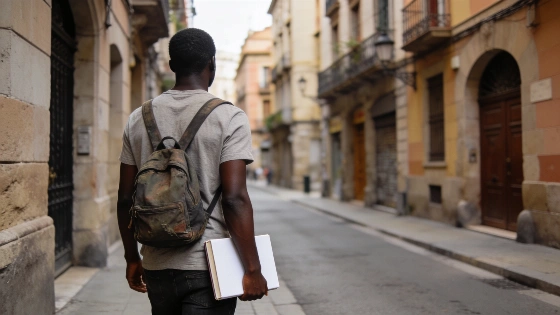
At 13, Ousman Umar left his village in Ghana after seeing an aircraft and dreaming of discovering the world. He later described lack of information as a decisive factor in his decision to leave. His journey took him across the Sahara and through Libya before he crossed by boat to the Canary Islands and continued to Barcelona. It lasted about five years. After four years in Libya, he reportedly paid around €1,500 for the boat passage. Many of his travelling companions did not survive.
In Viaje al país de los blancos, Umar recounts reaching Barcelona and what happened next. Without documents or Spanish-language skills, he at one point slept in the city’s metro system before Montse and her family took him in. The memoir puts personal detail into a migration story often reduced to statistics. Julia Otero has recommended the book, describing a narrative of hardship that also turns towards education and the possibility of a new start. The story was also adapted into a film directed by Dani Sancho and written by Guillem Clua. Umar appears as himself in the adult part of the film.
Umar later learned Spanish and Catalan, then English. He studied public relations and marketing, as well as business administration, and completed a master’s degree in international cooperation at ESADE. He is a writer and social entrepreneur. In 2012, he founded NASCO Feeding Minds to promote technological education in rural areas of Ghana. The organization develops educational projects and computer classrooms, giving children access to digital skills and information. 3Cat has reported that NASCO’s work has reached more than 60,000 young people. That work puts the book’s account into practice: expanding educational opportunities so young people can study and work in their communities.
Otero’s reading list
The recommendation appears among a varied group of books. Two classic novels by women anchor the selection: Leopoldo Alas «Clarín»’s La Regenta, about Ana Ozores under the scrutiny of Vetusta, and Gustave Flaubert’s Madame Bovary, centred on Emma Bovary’s dissatisfaction with provincial life.
Jane Austen’s Emma follows a young woman whose matchmaking plans lead to misunderstandings and self-examination. In July 2026, Otero again championed La Regenta’s relevance, joking that it should be given to Donald Trump.
Other choices turn to contemporary lives and questions of identity. Pedro Almodóvar’s El último sueño gathers twelve texts written at different times, while María Larrea’s Los de Bilbao nacen donde quieren traces a family story through adoption, secrets and the search for origins. Jesús Ferrero’s La posesión de la vida considers how identity and past choices shape a person’s life.
Elisa Beni’s Pisa mi corazón is a thriller linking a killing during a session of sexual domination to characters connected with architecture and criminal investigation. Carlos López-Otín’s Egoístas, inmortales y viajeras explains cancer by tracing its genetic origins and how cells change, alongside developments in treatment. Otero has said the essay helped her understand the disease and become more aware of her own body.