On July 21, 2026, Light introduced the Light Flip, a foldable phone designed to depart from the modern smartphone formula. The company says the device swaps touch navigation for physical buttons and a T9 keyboard, while removing social media and advertising. Infinite-scroll feeds are out too, in a bid to make habitual checking less automatic.
Light lists the unlocked phone at $299 for pre-order, with initial shipments expected in April 2027. It retains 5G connectivity and basic utilities, along with a rear camera, while the simplified interface is intended to put deliberate friction between a user and prolonged screen time. Research on digital habits offers context for that approach, though it does not establish that the Light Flip itself reduces compulsive use.
Physical Design and Features
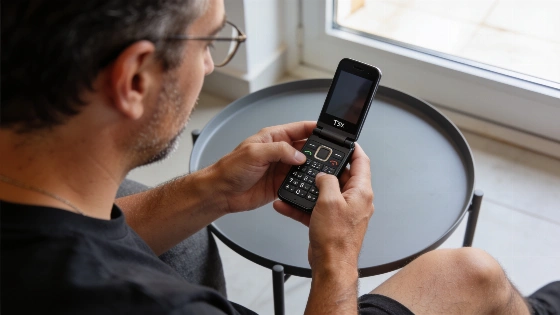
Light says the closed phone measures 110 by 58 millimeters and has a matte plastic shell rated IP54. It comes in six colors: black, navy blue, red, pink, yellow and light gray. Opened, it has a 2.8-inch matte OLED display, about 7.1 centimeters across. There is no touch input; navigation relies on a directional pad and physical controls, including the T9 keyboard. The listed hardware includes USB-C charging and a 3.5mm headphone jack. It also has a removable 1,800 mAh battery, plus a 50-megapixel rear sensor that produces 12-megapixel photos.
LightOS: Minimalism by Design
Light says its LightOS software is built around focused tools rather than feeds designed to hold attention. The company has described a developer program for practical functions such as QR boarding passes and tuners. It rules out social media and advertising, along with infinite feeds. Light calls the device an “anti-AI” phone: it has no built-in assistants or features intended to maximize engagement, though developers may create tools that use external processing, such as voice-to-text dictation. Light says it will not take commissions from third-party apps, even where developers charge subscriptions to cover server costs.
The design reflects a broader behavioral principle: inserting friction can interrupt automatic app-opening habits. A 2023 intervention reported in the Proceedings of the National Academy of Sciences involved 280 people using an app that paused before selected apps opened. Over six weeks, openings of those apps fell by 57%; users dismissed the pause and continued in about 36% of attempts. That study tested a software delay, not a button-based phone, so its results do not establish what effect the Light Flip will have.
Targeting Digital Fatigue
Light links interest among younger users to fatigue with notifications and data collection, as well as algorithmic targeting and privacy concerns around AI. The company has also launched “Flip Your Life,” a biweekly publication and newsletter offering ideas for offline activities and a more mindful relationship with technology.
Research points to possible effects of excessive smartphone use, but distinguishes habitual use from clinical addiction. A 2026 Semmelweis University study, covered by Inc., associated excessive scrolling with poorer memory and reduced attention, as well as disrupted sleep and balance problems. Johanna Takács, a senior research fellow at the university’s Faculty of Health Sciences, said that “personality alone … does not make someone addicted to their phone,” pointing to behavioral control, emotional regulation and fear of missing out as relevant factors.
Other findings show why usage time and problematic use should not be treated as interchangeable. A peer-reviewed study in BMC Musculoskeletal Disorders of female college students reported average daily smartphone use of 6.09 hours, with a standard deviation of 2.12 hours. It found associations between smartphone-addiction measures and forward-head posture and cervical disability; the results describe correlations, not proof that smartphone use caused those physical effects. Separately, Scientific American has described how unpredictable rewards can reinforce social-media checking. Neuroscientist Ian Anderson cautioned that automatic technology use “can also just indicate an ingrained habit.” Together, this research helps explain the appeal of reducing prompts and feeds, but does not amount to a clinical endorsement of Light’s product.
Pricing and Availability
The $299 price applies to the unlocked Light Flip. In the United States, Light also lists a 24-month contract at $39 per month, including 1 GB of data and unlimited calls and texts on AT&T and T-Mobile networks. Buyers should review the applicable regional price, delivery terms and carrier compatibility before ordering.
The Light Flip is positioned as an alternative to feature-packed smartphones, trading broad app access for a smaller set of functions and a more deliberate interface. Whether that design helps users reclaim time and attention will depend on how they use the device; the behavioral research offers a rationale for the approach, not evidence of a demonstrated outcome for this phone.