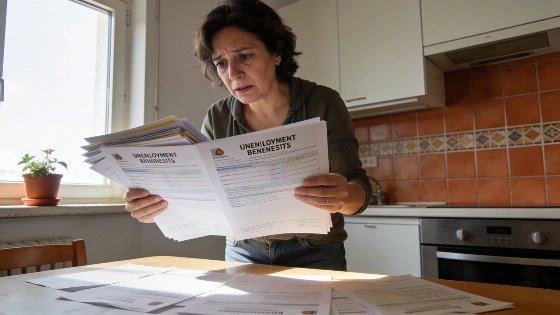
A Madrid woman must return €7,072 to the SEPE after failing to notify a major property gain while receiving unemployment aid. The court reduced the original claim, but the case highlights strict reporting rules and evolving penalties for benefit recipients.
When a Madrid resident received a €30,954 windfall from dissolving a property co-ownership in July 2021, she did not immediately inform the Servicio Público de Empleo Estatal (SEPE), despite being a beneficiary of the unemployment subsidy for those over 52. More than a year passed before she declared the gain in her annual income statement, a delay that would ultimately cost her thousands of euros.
In December 2025, the Tribunal Superior de Justicia de Madrid ruled that she must repay €7,072.46 to the SEPE. The court’s decision, which referenced case STSJ M 15635/2025, came after the agency initially demanded €10,055.13 for benefits paid between 2021 and 2022. However, the judges limited the repayment to the period after the property gain, recognizing €2,982.67 as legitimately received before the event.
Reporting Obligations and Changing Rules
Spanish law requires anyone receiving means-tested unemployment subsidies to promptly report any income changes that could affect eligibility. In this case, the woman’s property gain—classified as a capital gain—pushed her income above the allowed threshold. For 2026, the SEPE sets the monthly income cap at 75% of the minimum wage, or €915.75, while the subsidy itself remains at €480 per month.
Capital gains, including those from property sales or dissolutions, are counted toward this limit. The SEPE distinguishes between the total sale price and the actual gain, but any increase in assets must be reported. The only exception is for the habitual residence in certain calculations, but this does not exempt all property-related gains from being declared.
Sanctions and New Penalty Scales
Failing to report relevant income can trigger not only repayment demands but also sanctions. Since November 2024, the penalty system under LISOS has become more nuanced: the first infraction leads to a three-month loss of benefits, the second to six months, and the third to permanent exclusion. The woman’s case, however, was judged under the rules in force at the time of her omission, which focused on recovering overpaid amounts rather than imposing fixed fines.
It is important to note that declaring income in the annual IRPF tax return does not substitute for direct notification to the SEPE. The court made clear that tax filings and benefit obligations are separate processes. The agency only became aware of the gain when the woman submitted her annual income statement, by which time the overpayment had already occurred.
Practical Implications for Benefit Recipients
Anyone receiving the over-52 unemployment subsidy must file an annual income declaration and report any changes within 15 working days. If the SEPE detects a breach of income requirements, it can suspend payments, demand repayment, and initiate sanctions. The agency’s official guidance stresses the need to report any capital gains or significant income changes immediately, not just at tax time.
This case underscores the importance of understanding the rules around means-tested benefits in Spain. While the penalty regime has evolved, the obligation to report remains strict. For those relying on unemployment subsidies, failing to communicate a financial windfall can result in substantial repayments and, under current law, escalating penalties.