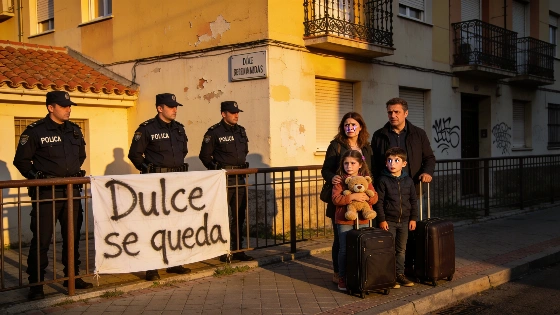
A family of seven, including three minors and a child with Down syndrome, was evicted on Wednesday from their home in Moratalaz, Madrid, despite a direct appeal from the United Nations Committee on the Rights of the Child to suspend the process. The property, owned by the Agencia de Vivienda Social de la Comunidad de Madrid (AVS), had been occupied by Dulce and Herminio with their children for five years without an official lease. Their attempts to secure public housing or a social rent contract had been unsuccessful.
The eviction, carried out on the second attempt after an earlier postponement, drew immediate protests from neighborhood associations and social organizations. Demonstrators gathered early at the El Ruedo housing complex, where the family lived. They voiced frustration and anger at the outcome. The UN committee had warned that removing the family without a suitable alternative could cause “irreparable harm” to the children, but the judicial order was ultimately enforced.
Municipal sources said social services had offered the family temporary accommodation, which they declined. The Sindicato de Inquilinas said the options included a single room in a shared house or a place in a shelter, both considered inadequate for the family’s needs, especially given the presence of a child with special requirements. The AVS did not provide what the union described as a “quality” alternative, and the Ayuntamiento reported that the family had said they had other relatives who could help.
Sira Rego, Spain’s Minister of Youth and Children, attended the eviction. Her presence highlighted the case’s political sensitivity. Miguel Ángel García Martín, the regional government spokesperson, defended the authorities’ actions, saying the judicial decision was binding and efforts to coordinate support for the family were ongoing. He called the minister’s presence opportunistic. The criticism reflected broader tensions over housing policy in Madrid.
Political reactions were swift. Pilar Sánchez, a Más Madrid councilor, described the eviction as a stark example of the region’s harsh social and housing policies. She accused the AVS of being the “largest evictor” in the area and criticized the sale of public land to private funds, which she argued leaves vulnerable families without options. The protest slogan “Dulce se queda” (“Dulce stays”) became a rallying point for those opposing the eviction.
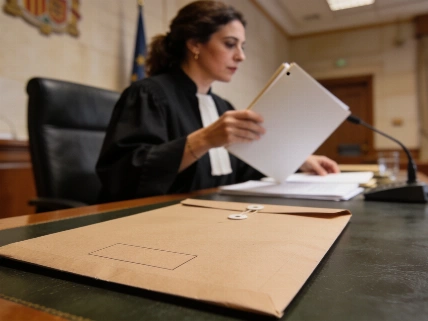
The Moratalaz case has unfolded amid other disputes over the recovery of publicly owned housing. In a separate Madrid case reported by elDiario.es in October 2026, Judge Raquel Catalá of Madrid’s Administrative Court No. 29 annulled an AVS decision to recover a home occupied by a family with five minor children and very limited income. Catalá reasoned that removing a family without income, when the administration had not shown it arranged alternative housing, would be “blind formalism” at odds with equity. The court also noted that the administration had not shown the property was already assigned to another eligible household through official allocation procedures.
That ruling concerned a different family and did not automatically determine the outcome of the Moratalaz eviction. Its reasoning nevertheless points to a live legal question in public-housing disputes: whether an administration has shown a concrete, current purpose for repossessing a home and an effective relocation plan for the occupants. Catalá also warned against exposing children to residential destitution only to leave a public home “empty and sealed.” The judgment blocked the recovery decision in that individual case; it did not establish a blanket rule barring evictions.
Separate October 2026 reporting by Público described hundreds of people facing proceedings over social housing. La Razón, meanwhile, reported a national pace of about 45 evictions a day during 2026. That figure is a countrywide benchmark, not a statistic specific to Madrid’s public housing or families with children. It illustrates the wider housing pressure surrounding cases such as Moratalaz.
The city has seen other disputes involving public authorities and vulnerable residents, including the legal battle over the eviction of an elderly tenant in La Latina, which a court temporarily halted. In a related case, Madrid authorities considered appealing a court’s suspension of an eviction involving an 81-year-old resident. The case highlights ongoing tensions between judicial rulings and social policy.
Spain’s housing crisis remains contentious, with rising rents and limited public housing stock affecting thousands of families. The situation in Moratalaz shows the challenges faced by people outside official support systems, particularly large families and those with special needs. Authorities maintain that emergency accommodation is available, but critics argue temporary solutions do not address the underlying problem of long-term housing stability. Policymakers and social organizations continue seeking more sustainable answers to Madrid’s housing challenges, working alongside affected residents.