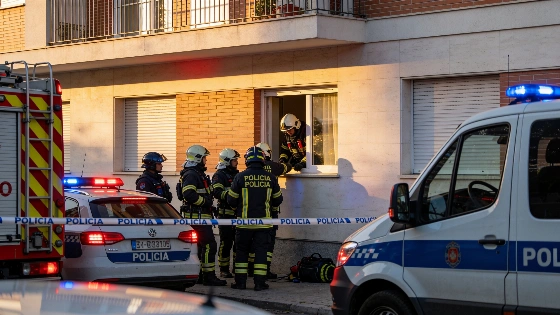
Neighbors in Madrid’s Las Tablas neighborhood reported a strong chemical smell Tuesday morning. Firefighters entered the apartment through a window and found a 37-year-old man unconscious on the kitchen floor, with numerous stab wounds. He was pronounced dead.
Medical teams from SAMUR-Protección Civil attempted resuscitation, but the man, who was of Argentine origin and also held Spanish nationality, was already in cardiac arrest and could not be revived. Police sources said a 20-centimeter knife was found near the body, and traces of a chemical substance, possibly pepper spray, were detected in the air. Emergency personnel experienced eye irritation when they entered, adding to suspicions that an irritant agent was present. El Mundo reported that the victim suffered 14 stab wounds and opened the door to his assailant before being sprayed with pepper gas and attacked.
The incident took place in the Fuencarral-El Pardo district. The National Police’s Homicide Group V is leading the investigation, examining the circumstances of the man’s death and the possible involvement of chemical agents. Police have released no information about suspects or motives.
Oleoresin capsicum, the active irritant in many pepper sprays, can cause eye irritation and tearing, along with burning and temporary breathing difficulty. These effects can complicate rescue operations in an enclosed space and pose risks to residents and first responders. Spain’s rules for civilian self-defense sprays require approved products, generally limited to 100 milliliters and subject to labeling and identification requirements. Their use is tied to an actual or imminent unlawful attack and must be proportionate. Using one as a threat or after danger has passed can carry administrative or criminal consequences.
In the Las Tablas case, the suspected use of an irritant alongside a fatal stabbing is part of the circumstances under investigation. The substance’s reported effects may explain why emergency personnel experienced eye irritation, while the circumstances of its deployment may help investigators reconstruct the attack.