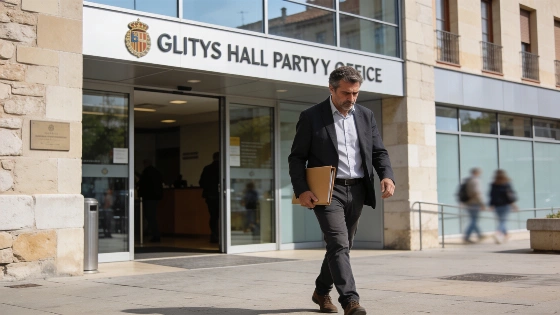
After a private audio recording became public, Marc Puigtió resigned as Esquerra Republicana de Catalunya’s prospective candidate for mayor of Girona, saying he was acting out of “dignity and responsibility.” The recording, which surfaced this week, captured remarks about party colleagues and internal political strategy. ERC opened an internal inquiry, and the controversy quickly affected the party’s local leadership.
The conversation reportedly included Puigtió discussing plans to remove colleagues from ERC and take control of electoral resources. He also raised the possibility of disclosing compromising information about other party members. ERC’s inquiry concerns those comments and his conduct. Puigtió apologized to party members and offered to explain himself in detail, while the party leadership stressed that any response should follow due process.
In a statement to l’ACN, Puigtió acknowledged a “serious mistake” and accepted responsibility. He also criticized the growing practice of recording and editing private political conversations before making them public, warning that it risked becoming normalized. He said the ERC project in Girona was “more impressive” than any individual and described his decision to step aside as an act of honesty, despite his regret over the episode.
Karim Sabni, ERC Girona’s secretary for image and communication, resigned from the local executive committee. Speaking on TV3, Sabni referred to the dangers of normalizing far-right tactics in connection with the leaked conversation. ERC president Oriol Junqueras told Catalunya Ràdio the episode was “extremely unfortunate” and “out of place,” while emphasizing that the party should let its internal process run before reaching final decisions.
For ERC in Girona, the immediate issue is how Puigtió’s departure affects local leadership and preparations for the municipal contest. His resignation as the prospective mayoral candidate and the inquiry into the recording are distinct developments: the first removes him from the candidacy, while the second addresses the conduct described in the conversation. The dispute has put the handling of private communications at the center of local debate over party ethics and internal trust.
Internal party disputes can also affect people beyond those directly involved, eroding public confidence and a party’s ability to present a united local organization. A separate example of the personal and political costs of party conflict came when former Jerez mayor Pedro Pacheco spoke out about the personal and political consequences of internal party conflicts. In Girona, how ERC handles the inquiry and leadership changes will shape its response to the fallout from Puigtió’s departure.