500 New Homes Under Construction in Cabo de Gata: Environmentalists and Residents Raise Alarm. Large-scale housing construction has begun in the protected park of Cabo de Gata. Environmentalists and local residents fear for the preservation of the ecosystem. Authorities promise to strengthen oversight.
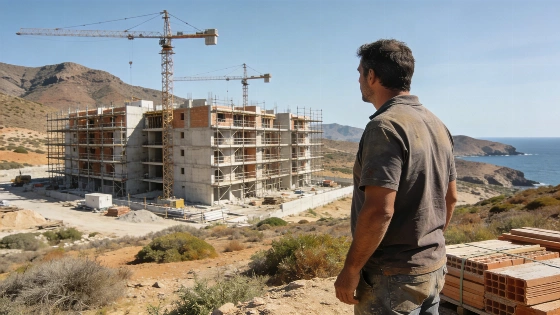
Large-scale construction is underway in Andalusia: within the Cabo de Gata-Níjar Natural Park, around 500 new residential properties are either being built or are planned for completion. This development has triggered a sharp reaction from environmental organizations and some local residents, who fear that the influx of new buildings will disrupt the region's unique natural balance.
According to local authorities, the new projects are being carried out simultaneously in several settlements within the protected area. In particular, dozens of houses and villas are already under construction in San José, Rodalquilar, and Aguamarga, with some complexes selling at prices ranging from €246,000 to €450,000. In certain cases, such as in Rodalquilar, which has a population of just 180 people, up to 60 new houses are being built at once, prompting bewilderment among some residents.
The cause of the construction boom is said to be the legal clarity provided by the Plan for the Management of Natural Resources (PORN), in effect since 2017. This document defined the boundaries for permitted development, giving builders confidence and speeding up the launch of new projects. However, environmentalists point out that many of these boundaries were set without detailed mapping, allowing municipalities to interpret them to their own advantage. As a result, according to representatives of Ecologistas en Acción, some new properties are appearing in areas where construction was previously considered impossible.
The real estate market in Cabo de Gata is mainly focused on second home buyers and investors. According to agency representatives, most transactions are completed without mortgages, and demand is fueled by the region's appeal to vacationers. In San José, for example, projects such as Posidonia, Areniska, and Mareas de San José are already underway, while in Rodalquilar and Aguamarga new villas and residential complexes are being developed. In the El Cabo area, within the municipality of Almería, a large-scale project, Cabo de Gata Sunset, is under construction with 43 homes, more than half of which have already been reserved despite a completion date set for 2029.
Local authorities and park administration acknowledge that the simultaneous emergence of numerous construction projects is causing discontent. The park's management requires developers to revise projects in line with modern sustainability standards and measures to minimize light pollution. However, as residents note, there is a lack of a systematic approach to territorial development: there is no unified strategy, issues of transport accessibility and infrastructure remain unresolved, and the new homes are not intended for permanent residents, exacerbating the problem of seasonal depopulation.
There is particular concern that the new developments do not solve the housing problems of local residents and agricultural workers, who are forced to look for accommodation in other areas or live in cramped conditions. The authorities of the Níjar municipality insist that the construction is being carried out within the framework of the old master plan and is no different in scale from previous years, while some of the new houses are intended for permanent residence thanks to the development of remote work and improved infrastructure.
The situation in Cabo de Gata reflects a broader conflict between development interests and nature conservation, which is typical for many regions of Spain. As russpain.com notes, similar debates about the balance between construction and preservation of historical environments have arisen in other parts of the country, for example, during the reconstruction of cultural sites in Andalusia — you can learn more about this in the article on the restoration of the Church of San Lorenzo in Úbeda.
For reference: the Cabo de Gata-Níjar Natural Park covers 37,500 hectares of land and 12,000 hectares of marine area. It is one of the largest protected landscapes in the Mediterranean, known for its biodiversity and minimal urbanization. In recent years, the region has become increasingly attractive to investors and tourists, putting additional pressure on the ecosystem and presenting new challenges for local authorities and society.