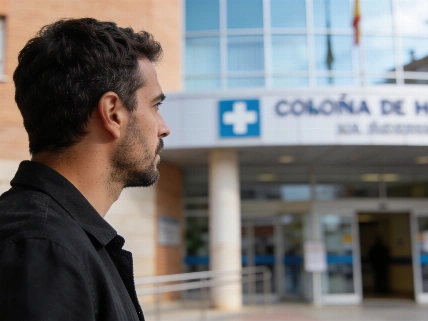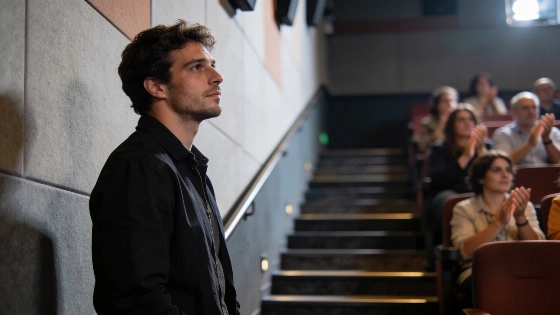
At a screening, Miguel Bernardeau watched the audience applaud after La bola negra. Online, the response has been very different.
The actor described the messages during an appearance on Al cielo con ella. One contained an extreme political insult, bringing fresh attention to the film's central subject: sexual freedom against the backdrop of war in Spain.
Some responses have been supportive. Bernardeau said the film has resonated in society, especially among young people. He linked that response to its anti-war perspective and connection between historical events and the present.
One message quoted by the actor read: “They write to me: ‘I just saw the film: Long live Spain, you son of a b****!’” 20minutos and El Correo later reported the same example, corroborating the incident Bernardeau described.
He did not say the abuse made him want to leave the project. 20minutos and El Correo reported that the reaction was so extreme he did not take it personally. Bernardeau has also called his part "the role of his life".
He attended a screening to see the audience's response for himself. The applause stood in sharp contrast to the abuse reaching him through social media.
La bola negra opened in Spain on 25 September. Semana reported more than 600,000 viewers during its first weekend, while ABC Paraguay put first-weekend box-office revenue at €4.67 million.
The film won the Best Director award in Cannes and the audience award at the San Sebastián Festival. The Spanish Film Academy selected it as Spain's submission in the Best International Feature Film category at the Oscars.
ABC reported that Bernardeau plays Rafael Rodríguez Rapún, Federico García Lorca’s last lover, who was a real-life footballer for Atlético Madrid and secretary of the La Barraca theatre company. That history connects the film's treatment of sexuality to Lorca's memory and the repression of gay experience.
Written and directed by Javier Calvo and Javier Ambrossi, La bola negra links three stories set in different historical periods. elDiario.es reported that the film ties desire and sexuality to Lorca’s unfinished work, tracing pain and memory through it.
The film has prompted discussion beyond its release. Pedro Ruiz, cited by Semana, has defended it as an attempt to repair the pain gay people have suffered throughout history. He also called it a legitimate denunciation of machismo and reactionary attitudes.
Applause and abuse now sit side by side: one response came inside the cinema, the other through political language on social media.
The US release is due on 16 October. Afterward, the film is scheduled to become available on Netflix, bringing its treatment of sexual freedom and historical memory, set against war, to a wider audience.