Citroën and Fiat are expected to lead the first phase of Stellantis’ planned low-cost electric-car programme, with Opel joining later. The European E-Car initiative covers small electric city cars for several group brands. It is meant to revive affordable entry-level mobility as costs for batteries and compliance, alongside raw materials and semiconductors, make small EVs harder to develop profitably. Production in Europe is targeted to start in 2028, but Opel has not given a date for Spanish sales.
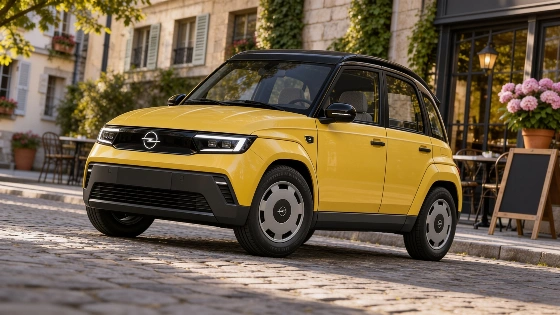
The German brand’s proposed city car is intended to cost around €15,000 before subsidies. That remains a target, not a confirmed retail price. The final figure and any conditions attached to it have not been announced. Stellantis lists Opel’s current most affordable passenger car, the Frontera Start, at €21,990 including German VAT, putting it above the planned entry-level EV.
Opel plans to share an architecture with other brands through the group’s E-Car programme. The future Citroën 2CV is one of the planned relatives. Shared underpinnings could lower each manufacturer’s development burden, while the source says European teams will still handle each model’s design and set-up. Stellantis CEO Antonio Filosa said on 12 November 2026 that Leapmotor would help develop the group’s affordable electric cars and support work on future electric and electronic solutions.
The project brings Opel back to the A-segment, below the Corsa. The brand previously sold the Adam. Smaller models such as the Karl and Agila have since left its range. Its new electric car is intended for everyday journeys, but technical details remain unconfirmed. Stellantis has described the wider programme as a return to affordable “people’s mobility.” One planned production site, its Pomigliano d’Arco plant, has a history of making compact mass-market cars, including the Fiat Panda.
Output has not been disclosed. Battery capacity and driving range are also unknown, leaving buyers unable to judge how the car might fit their journeys. Opel has not settled on a name. Agila and Nova are among the possibilities, with Viva or Adam also under consideration.
Stellantis plans to build the new cars in Europe, including at Pomigliano d’Arco in Italy. The 2028 target marks the planned start of manufacturing, not a confirmed delivery date for Opel’s model. A separate report on electric models built in Spain covered the Cupra Raval and Volkswagen ID. Polo at Seat Martorell; it does not establish where Opel’s car will be assembled. In Spain, 16,325 new fully electric passenger cars were registered in October 2026, up 76% from October 2025, according to Autonomía Coches Eléctricos. The report also identified Leapmotor as Spain’s third-largest Chinese car brand.
Leapmotor is also part of the programme, bringing experience with lower-cost electric vehicles. Fiat is expected to develop a small model that could use the Koala name. Leapmotor, meanwhile, is working on a next generation of its T03. The cooperation draws on Leapmotor’s vehicle-development experience and Stellantis’ planned European production, but does not establish that Opel’s car will be a rebadged Leapmotor model.