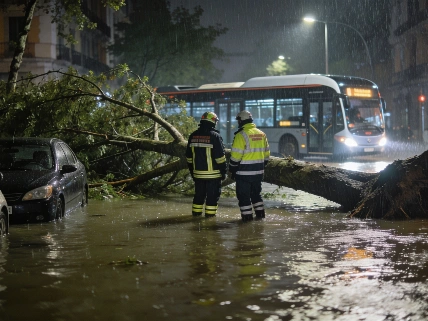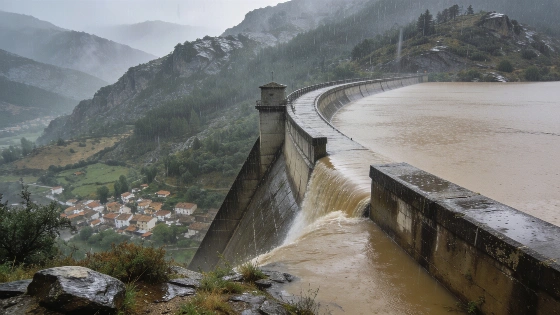
Puerto del Pico recorded 76.4 litres of rain per square metre, the highest total reported in Spain at the time on the Aemet website. Amid the downpour from storm Bruna on 10 November 2026, the Junta de Castilla y León ordered the evacuation of Piedralaves, a town of about 2,200 people, over the possible overflow of the Horcajo dam, which lies north of the town in the Sierra de Gredos area.
The order came as the south of Ávila and northern Cáceres faced red weather alerts for rainfall that could reach 120 litres per square metre in 12 hours. The warning for southern Ávila ran from 9am until midnight; the alert in northern Cáceres covered the same period. Cadena SER reported 38 litres per square metre in Piedralaves during the morning. The evacuation was a precaution against the dam and flood risks, not an announcement that the dam had overflowed.
The regional Agency for Civil Protection and Emergencies issued the evacuation instruction through Spain’s Es-Alert system, which sends emergency alerts directly to mobile phones in a defined area. Residents were directed to the municipal sports pavilion or San Juan de la Cruz school and told to follow official instructions. The Junta also suspended school activity in 32 municipalities in southern Ávila, affecting 943 pupils; those municipalities had a combined population of about 49,000. Aemet issued the red alert, and the Junta declared operational level 2 under Inuncyl as rising river flows were forecast to threaten urban and rural areas.
Rainfall across the region
After Puerto del Pico, the largest reported totals included 68 litres per square metre at Nuñomoral in Cáceres and 64.8 at La Covatilla in Salamanca. Navasfrías, also in Salamanca, had recorded 53.6 litres by 7am. The figures reflected a concentrated spell of rain across southern Ávila and Salamanca, with northern Extremadura also affected.
The Junta said the level 2 declaration took account of rainfall already recorded and expected increases in river flows. It warned that resulting floods could exceed the response capacity of local services, according to a territorial delegation statement carried by Europa Press. The escalation placed the response under the regional flood plan and supported coordination through the Centro de Coordinación Operativa Integrada (Cecopi).
Cecopi monitored weather and river conditions with local authorities and emergency services. The Delegación Territorial advised people at the time to avoid unnecessary journeys in intense rain and stay clear of flooded routes, particularly at riverbeds and underpasses. José Francisco Hernández, the Junta’s territorial delegate in Ávila, also said authorities were considering the risk of a structural failure at the Horcajo dam alongside the possible overflow risk.