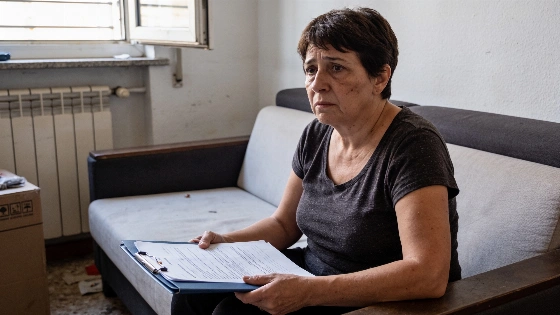
A Madrid woman battling cancer was stripped of her home after a sophisticated scam exploited her financial vulnerability. Police have now arrested 30 suspects and identified dozens of victims, exposing a criminal operation that preyed on the elderly and isolated.
By the time police reached Francisca’s apartment in Madrid, it was too late. At 62, a former emergency nurse living on a disability pension, she had already lost her home to a group that preyed on vulnerable pensioners. Their approach was simple and brutal: confuse, pressure, and take away property rights, leaving victims with nothing but anxiety and a legal fight to get their homes back.
Francisca’s trouble started with a phone call. She was nearly done paying off a physiotherapy table when a woman, claiming to be from Cofidis, told her she was required to buy more products. Still recovering from years of illness and depression, Francisca believed her. Soon after, a man named Alberto showed up at her door, dressed sharply and carrying a catalogue. He pitched a “special anniversary offer” that would supposedly keep her payments low. She signed the papers, not realizing she was stepping into a trap.
According to official police reports cited by El Mundo, the criminal network operated not only in Madrid but also in Valdemoro, Leganés, Getafe, Ciudad Real, and Murcia, highlighting the scheme's regional reach.
The visits kept coming. Another man, Josué, arrived, saying he could help her get better prices on the products she’d just bought. When Francisca refused, citing consumer protection rules, Josué changed tactics. He claimed to know lawyers who could erase her debts through the Ley de Segunda Oportunidad. The offer: a fresh start, with an upfront payment and monthly transfers totaling €32,000. The reality: she was signing away the bare ownership of her flat for a fraction of its value.
At the notary’s office, no one told Francisca she was selling her home. The document was read aloud, but the word “sale” never came up. The buyer introduced himself as another lawyer from the supposed helpful firm. The deal was done in 24 hours, with the flat valued at €32,000—far below its real worth. The first payment arrived, but any sense of security vanished quickly. When Francisca tried to undo the deal, she was told it would cost her €50,000. The calls turned threatening: “Did you think a company would give you money for free? What the notary says cannot be undone.”
Francisca kept quiet for a week, ashamed and anxious. Only after telling friends did she seek medical help for her stress. She resigned herself to living in her flat as a usufructuary, with no hope of getting it back. But in July, police raided the network, arrested 30 people, and identified 57 victims. The group’s bank accounts were frozen, stopping the monthly payments and giving Francisca a small hope: if the buyers defaulted, the contract might be voided.
Police sources and major Spanish media report that the operation led to the freezing of assets and accounts worth up to €4 million, and the blocking of 47 properties in the land registry to prevent further fraudulent transfers while the investigation continues.
The scammers tried to pressure her into signing statements in their favor, but failed. Francisca went to the police, identified the main players—Alberto, Josué, Joseline, and others—and confirmed her story in court. Now she waits for a final judgment that could return her home. The police operation, led by Madrid’s Judicial Police and the Alcalá de Henares unit, has given her some relief and reduced her need for medication. “They have given me security and unconditional support,” she says, crediting the officers for blocking the registration of stolen properties.
This case shows how easily criminal groups can exploit legal loopholes and the vulnerabilities of the elderly. The speed of the notarial process, the psychological pressure, and the use of legal jargon all point to a system that failed to protect those least able to defend themselves. As the courts move toward a verdict, the outcome will show whether Spain’s institutions can protect its most fragile citizens from these schemes—or whether, for many, justice will come too late.