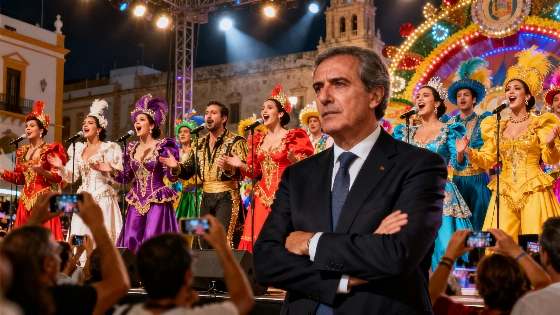
Attempt to Ban Political Songs at Cádiz Carnival Sparks Scandal. A conflict erupted in Andalusia over an attempt to prohibit political performances at the carnival. A complaint from the PP led to accusations of censorship and a wave of support for the artists. Cádiz authorities and event organizers refused to cancel the celebration.
A fierce conflict has erupted in Andalusia over an attempt to restrict freedom of expression at the traditional carnival. Two days before the end of the election campaign, the Partido Popular (PP) from the city of Alcalá de Guadaíra appealed to the electoral commission demanding a ban on the performance of politically themed songs at the Carnaval de Primavera festival, scheduled for Saturday — the day of silence before the elections. The event is organized by the municipality, which is governed by the PSOE.
The PP's complaint was accompanied by videos and song lyrics which, in the party's view, contain political statements and criticism of social issues. Particular attention was paid to the group DSAS3 led by Jesús Bienvenido, whose repertoire this year is dedicated to defending Andalusia’s healthcare system and criticizing the state of regional medicine. The PP did not demand the cancellation of the festival itself, but insisted that city authorities prohibit the performance of songs with political overtones and called for organizers to be held accountable in case the ban was violated.
The Seville Electoral Commission has begun reviewing the complaint, giving the municipality 24 hours to prepare its objections. So far, no restrictive measures have been taken. However, the publication of information about the complaint provoked a sharp reaction in Cadiz and beyond. Representatives of DSAS3 and other prominent carnival participants called the situation an unprecedented attempt at censorship. A campaign to support the artists began on social media, with users urging people to widely publish carnival couplets on the day of the festival.
In the morning, the head of the provincial branch of the PP and mayor of Cadiz, Bruno García, publicly appealed to the party leadership in Seville to withdraw the complaint, stressing that he learned about it from the media and does not support such initiatives. According to him, the carnival is a space for freedom, and any restrictions are unacceptable. The municipality of Alcalá de Guadaíra confirmed that the event will take place as planned, and the program was approved well before the election date was announced. City authorities officially referred to Article 20 of the Spanish Constitution, which guarantees freedom of expression, and stated that they see no grounds for intervention.
The situation surrounding the Cádiz carnival has become one of the most talked-about topics in the region, and the attempt to limit performers' participation has only increased interest in the event. DSAS3 guitarist Pedro Campos noted that the scandal has brought the group extra attention, promising to perform with even greater energy. Similar conflicts between political parties and cultural events in Spain are not new: previously, disputes have arisen in the country over the permissibility of political statements at mass gatherings, as was the case, for example, with environmental protests in Huelva, which were covered in the article on the consequences of the accident and elections in the region.
For reference: Article 50 of Spain's Electoral Law prohibits any campaigning on the day of reflection, but the issue of the limits of freedom of expression at cultural events remains a topic of debate. The Cádiz carnival is traditionally considered one of the most vibrant and free cultural phenomena in the country, and its participants often use the stage to discuss pressing social and political issues.