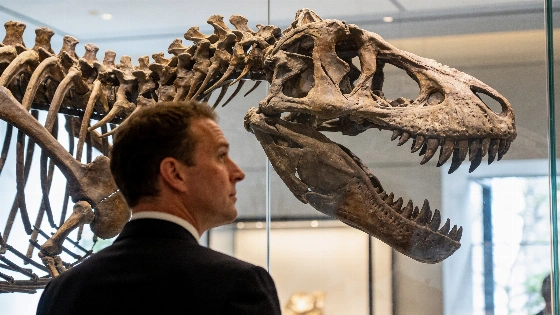
A Tyrannosaurus rex skeleton sold for over 50 million dollars. Most T. rex fossils are now in private hands. Scientists warn that crucial evolutionary evidence is slipping beyond reach.
In July 2026, a Tyrannosaurus rex skeleton known as "Gus" sold at auction for $50.1 million. The sale took just ten minutes. The buyer remains anonymous, but the outcome is clear: another important fossil is now out of reach for researchers, kept as a private collectible. Sotheby’s and several European news outlets reported that this sale set a new record for dinosaur fossils, topping previous auctions for specimens like "Stan" and "Apex." Prices for rare fossils have soared in recent years.
This isn’t a one-off event. The private fossil market has grown rapidly, drawing in wealthy collectors and celebrities such as Leonardo DiCaprio and Russell Crowe. The sums are huge, but the bigger loss is to science. Current estimates suggest that only about 11% of all discovered T. rex fossils are in public collections where researchers can study them. The rest are in private hands or traded as luxury items. This 11% figure comes from secondary analyses and is meant to show the scale of privatization, not as a precise count.
The sale of the T. rex skeleton "Gus" at Sotheby’s lasted only about 10 minutes, setting a new auction record for dinosaur fossils.
For paleontologists, the impact is direct. El País reported that a single fossil in a private collection could have answered key questions about viper evolution, but it remains inaccessible. Similar stories play out elsewhere. In the UK, a large Jurassic marine fossil collection—hundreds of specimens, some possibly new to science—was sold to a museum in Abu Dhabi for an eight-figure sum. British scientists called it a major loss for national research. Analyses in academic and museum circles point out that removing fossils from public access limits opportunities for comparison and future verification.
The laws around fossil sales vary widely. In the US and UK, fossil trading is allowed under certain rules. In Spain and much of Latin America, fossils are considered national heritage and cannot be sold. These legal differences drive both the legal and illegal fossil trade, and often fossils are removed without proper scientific documentation. When that happens, important information about their position in the rock and the processes that affected them after burial is lost, reducing their scientific value.
Some have suggested temporary loans as a compromise, but researchers say private ownership does not guarantee future access. Scientific journals are increasingly rejecting studies based on privately held fossils, since other scientists cannot re-examine the specimens.
The 1997 sale of the T. rex "Sue" stands out in fossil market history: unlike most private transactions, "Sue" was purchased by a consortium and placed in a public museum, providing ongoing access for research and education. This case is often cited as a model for balancing private sale with public benefit.
The problem goes beyond individual fossils. When specimens are taken from their original sites without proper records, details about their age, environment, and how they formed are lost for good. This makes it harder for scientists to piece together the history of life on Earth.
Owning a piece of prehistory has obvious appeal, but the unchecked growth of the private fossil market is erasing decades of scientific work. The current system favors secrecy and speculation over open research. Without stronger international rules and better access for scientists, key fossils—and the knowledge they hold—may be lost for good.