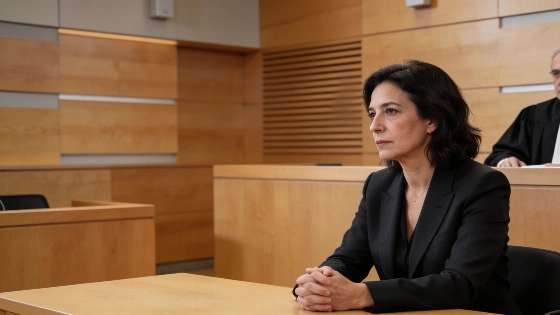
Ana María Fuentes, the PSOE’s finance chief, told Spain’s National Court that she approved payments but did not oversee contracts or their execution. Her testimony pointed to the Organization Secretariat, led by Santos Cerdán, and renewed scrutiny of how the party manages its finances amid the growing scandal over the ‘caso Leire Díez’.
The investigation centers on more than €150,000 paid through lawyers Ismael Oliver and Jacobo Teijelo. Information from the judge, the payments were supported by "commissioning notes" signed by Fuentes. Prosecutors suspect the documents were fabricated to disguise the real purpose: rewarding Leire Díez for helping shield the PSOE and Pedro Sánchez’s government from damaging court cases. At a National Court session on September 9, 2026, the focus was on these payments and whether a coordinated effort inside the party aimed to influence judicial outcomes.
Fuentes, now a defendant before Judge Santiago Pedraz, maintained that her role was limited to authorizing payments. She said she did not choose contractors or check whether services had actually been delivered. Her defense seeks to distance her from the core of the alleged scheme, which investigators believe Díez and Cerdán ran to protect the party’s leadership from legal threats. Demócrata’s summary of the UCO report describes a possible structure coordinated by Santos Cerdán and Leire Díez, with party resources allegedly used to obstruct judicial cases that could affect the PSOE or Pedro Sánchez.
The court’s summary describes Fuentes as a facilitator, not the mastermind. The judge wrote that her actions could amount to complicity or co-authorship in falsifying documents, but not leadership of a criminal group. The evidence includes two payments totaling €27,225 routed through Oliver’s companies and three invoices from Teijelo for €125,000, supposedly for legal advice that investigators say was never provided. Media reports and police documents highlight at least €43,225 paid to Leire Díez through intermediaries such as Gaspar Zarrías or Ismael Oliver. Investigators are closely examining these sums. EFE reported that other testimonies and judicial actions that same week focused on contracts and allegedly fictitious invoices, alongside meetings and audio recordings concerning a professional relationship investigators say did not exist.
The case has exposed weaknesses in the PSOE’s financial oversight, echoing earlier internal disputes such as the withdrawal of Sara Oviedo from the Leganés mayoral race. Both incidents point to deeper problems with accountability and transparency in the party’s leadership.
As the investigation continues, the PSOE faces pressure to explain its internal controls and regain public trust. The party’s leadership must decide whether to address the weaknesses that allowed these schemes or risk further damage to its credibility.