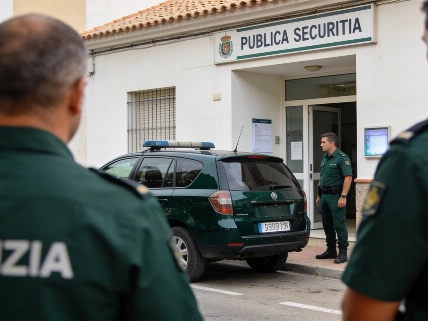
Bolivia’s unrest and wider public-order problems raised concerns about guaranteeing the Queen’s safety and that of her team. The security situation was one of two reasons given for cancelling the planned cooperation visit. Road blockades unfolded amid a continuing state of exception, complicating the delegation’s movements and planned visits to cooperation projects. El País reported that officials in La Zarzuela said the conditions for guaranteeing security were not in place.
The visit was announced in spring 2026 and initially postponed until after the summer as the situation deteriorated. Casa del Rey and Spain’s Ministry of Foreign Affairs, European Union and Cooperation later decided to cancel it in coordination, El País reported. The other factor was Spain’s early election, scheduled for 29 November. Prime Minister Pedro Sánchez announced on 5 October that the election would be brought forward; the final cancellation was reported on 7 November.
The election also places a particular constraint on the Royal Family. María José Gómez Verdú, an expert in protocol and royalty, told Lecturas that royals should accompany the country’s institutional life without becoming part of the political contest. They do not vote or campaign, she said. Public appearances should not be read as support for particular political interests.
Spain’s institutional backdrop has also included disputes involving government office-holders. The Supreme Court’s rejection of complaints against Pedro Sánchez and several ministers over the Ceuta migration crisis was covered in a separate court report.
Gómez Verdú said the election-related absence of royals from public events does not remove their institutional role. She also questioned whether Casa del Rey has enough room to maintain its commitments when the political context becomes especially sensitive.
The cooperation trip has a practical purpose beyond ceremony. The planned four- or five-day itinerary was to focus on Spanish-funded development projects. Visits would involve beneficiary communities and local organizations, with Bolivian authorities and representatives of the Spanish Agency for International Development Cooperation (AECID) also participating. Letizia’s presence on the ground can draw attention to development initiatives and bring her into direct contact with communities’ needs. It can also support the work of Spanish cooperation programmes.
Spain has previously included Bolivia in its royal cooperation diplomacy. The Ministry of Foreign Affairs records a visit by Queen Sofía from 15 to 19 October 2012, accompanied by Jesús Gracia, then Secretary of State for International Cooperation and for Ibero-America.
Gómez Verdú said the cancellation means the Queen loses a chance to develop this part of her role, while Spain loses an opportunity for international visibility through public diplomacy. She stressed that security must take priority given the conditions in Bolivia.
After learning of the decision, Letizia spoke personally with Bolivia’s President Rodrigo Paz Pereira at the Ibero-American Summit in Madrid. She conveyed her wish to make the visit at a later date. Casa del Rey and the Spanish government still intended to arrange the trip when political and social conditions became more suitable.