The Madrid-Seville line carried close to 17,000 passengers a day, while its stated capacity was 35,000 seats. On 28 October 2026, a Renfe train collided with a stationary Iryo train near Urda, about 130 kilometres south of Madrid, closing the corridor. Rail Journal reported 69 deaths and roughly 200 injuries; the BBC described the crash as one of Europe’s worst railway disasters of the century. The route is one of Europe’s busiest high-speed corridors. Its closure left airlines and road operators absorbing displaced demand.
Renfe had blocked ticket sales through December at the time of the report, with no firm reopening date given. On 3 November, Transport Minister Óscar Puente said the line could resume within ten days at most, subject to judicial authorization for reconstruction at the crash site. He said services would run less frequently after reopening while track remodelling and safety work continued. Spain’s Council of Ministers also approved an eight-measure rail-safety plan that day. Puente said reduced services would remain in place while the Spanish Railway Safety Agency reviewed the system and Spain completed the delayed ERTMS Level 2 signalling deployment, expected to enter service in early 2027.
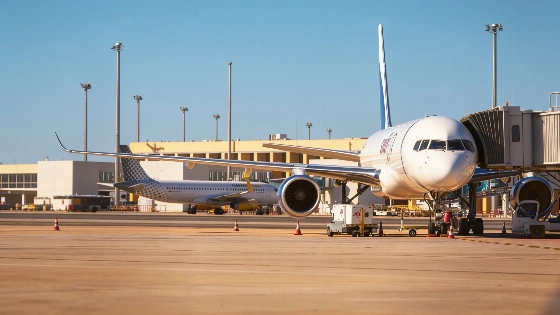
Seville airport recorded a sharp rise in travellers from 28 October, with more than 200 flights a day and more departures to Madrid and Barcelona. Long security queues formed. Reduced staffing meant waits of up to 25 minutes to enter the screening area. The union CSIF said the rail suspension and increased flight activity had raised passenger traffic and operational workloads, while also increasing surveillance needs at the airport. It alleged security staff were handling more duties with fewer resources.
Iberia added 98 flights through 8 November, providing 10,734 extra seats in Seville or 20,718 when Málaga was included. Air Europa operated four daily services between Seville and Madrid, counting both directions, and used A321 aircraft on some flights. Wizz Air introduced two daily Madrid flights. Vueling also scheduled an extra Barcelona service and replaced an aircraft with a larger one.
Higher fares prompted government action. Royal Decree-Law 32/2026, dated 3 November, introduced temporary maximum-price controls for goods and services affected by an officially recognized emergency. The ceiling was to be based on a prior reference period, using an objective and verifiable method. For strongly seasonal services, the comparison could use the equivalent dates from the previous year, adjusted for inflation. The account said the legal limit was due to expire on 10 November; extending it would require an application to the European Commission.
Facua reported suspected artificial price inflation to the Consumer Ministry after examining 279 scheduled flights between Madrid and Seville or Málaga for travel from 5-15 November, covering five airlines. The association said the cheapest fares on the affected routes were about €15-€42, while standard one-way tickets generally ranged from €50 to €85. In its fare comparisons, the most frequent Iberia Express fare was €98.53, compared with €38.53 in February, a rise of 155.7%. Air Europa’s most frequent fare was €83.53, against €33.48 in February, up 149.5%. Iberia set a ceiling of €99. Facua asked authorities to investigate possible breaches of the emergency price limits; its complaint focused on suspected excessive increases, not higher fares alone.
Road capacity was stretched too. Confebus estimated that coach travel between Madrid and Andalucía had increased sixfold over the weekend, while noting that the All Saints’ Day holiday normally boosts movement. The sector said it could add capacity and denied raising fares. Regulated maximum prices put a six- or seven-hour journey at about €40.
Socibús said it began reinforcing services on 28 October towards Andújar, Córdoba, Seville, Huelva and Cádiz. It reported a tenfold increase in its fleet, around 3,000 passengers a day and all 4,000 bridge-period seats filled, including capacity supplied by other operators.
BlaBlaCar reported that new driver registrations rose by more than 150% on the day of the accident. Requests for seats increased tenfold, while published journeys rose sixfold. Its director, Florent Bannwarth, said 80% of Madrid-Andalucía journeys were full and defended an average fare of €29 as being within legal limits. The newspaper’s own checks for 6-15 November found that most listed fares exceeded €40, with exceptions.
Uber offered a special Madrid-Seville journey for a fixed €150, equivalent to €37.50 per person with four passengers. Taxi drivers at Santa Justa station reported a fall of more than 40% in fares and said only two cars were available for a small number of travellers. A separate road-safety report concerned a motorcyclist recorded at 200 km/h on the C-17.