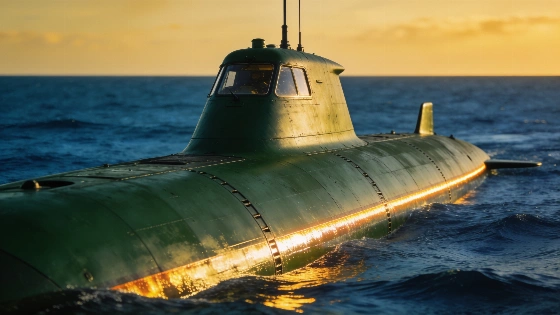
On 24 November 2019, Spanish authorities intercepted a transoceanic semi-submersible in the Aldán estuary near Cangas, Pontevedra, Galicia, carrying approximately three tonnes of cocaine. The operation involved the Guardia Civil, Policía Nacional and Servicio de Vigilancia Aduanera. It was widely regarded as Europe’s first confirmed seizure of a transatlantic narco-submarine. The vessel’s design kept most of its hull below the waterline, a method developed in South America to move multi-tonne consignments while reducing the risk of detection.
That seizure sets the scene for the third episode of the second season of ‘La Semana con Pepa Bueno’. RTVE Noticias says the programme examines how trafficking organisations have evolved, Spain’s place in international cocaine routes and the difficulties police and courts face in tackling the trade. Laura Rebollo, deputy director of Customs Surveillance Operations, and Emilio Rodríguez, chief inspector at Greco Galicia, take part. Galicia’s Atlantic coastline and maritime infrastructure have made it a major landing area for cocaine; later narco-submarine cases were reported in A Pobra do Caramiñal in September 2025 and Muxía in August 2026.
The episode looks beyond drug seizures. Journalists Nacho Carretero and Javier Romero discuss the networks that receive and distribute cocaine, rising violence and the movement of trafficking money into legitimate economic activity. Spain’s geographic position and extensive coastline make it a strategic point for international organisations, the programme says. Eurojust’s figures underline the scale of the wider trade: it coordinated 174 cocaine-trafficking cases in 2019, rising to 526 in 2023, after 219 in 2020, 303 in 2021 and 423 in 2022. The agency identifies Spain, Belgium and the Netherlands among the countries reporting the largest quantities of drugs seized, reflecting their role as cocaine entry points.
Carretero warns that Spain must not allow the narco to infiltrate its economy. The discussion also points to the need for resources, technology and international cooperation. In a separate 2024 maritime case, Spanish Customs Surveillance pursued a vessel about 160 nautical miles from Cabo de San Vicente, in Portuguese waters, following information from the US Drug Enforcement Administration. The four Colombian crew members allegedly sank the vessel and an estimated four tonnes of cocaine before the cargo could be recovered; Spanish prosecutors later secured convictions using circumstantial evidence, including material connected to the 2019 Galicia seizure. The European Commission has also reported that MAOC-N, the Maritime Analysis and Operations Centre–Narcotics, supported international partners in maritime seizures exceeding 70 tonnes of cocaine in 2024. RUSSPAIN has also covered changes in public office, including the Ombudsman handover.
The programme also looks at fast surface craft. Spain prohibited high-powered narcolancha speedboats in 2018, but later reporting described their increasing use in cocaine smuggling. The boats, historically associated with Morocco–Spain cannabis trafficking, differ from semi-submersibles: narcolanchas are used for rapid coastal movement and cargo transfers, while semi-submersibles carry drugs covertly across longer ocean routes. A 2024 investigation in southern Spain, reported as involving fishing vessels, disguised speedboats and the Guadalquivir River, resulted in the seizure of 1,900 kilograms of cocaine: 1,200 kilograms in a vehicle in Dos Hermanas and another 700 kilograms in a concealed farm storage pit near Sanlúcar de Barrameda.
The 30-minute programme combines narrative podcasting with conversations with specialists. It is recorded in Radio Nacional’s Studio 4, which serves as both a radio studio and a television set. ‘La Semana’ received the award for Most Innovative Videopodcast at the fifth Signal Awards for its episode ‘Memoria LGTBIQ+’.