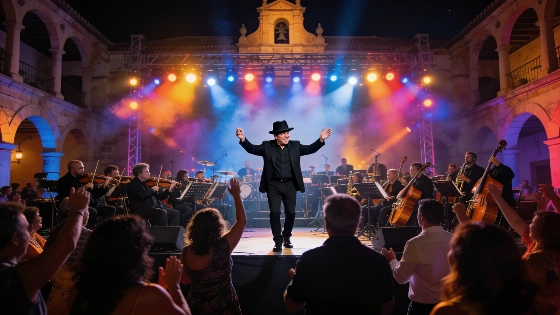
At Poble Espanyol in Barcelona, Rubén Blades took the stage as many in the audience regarded the concert as a farewell. At 78, Blades suggested this could be his final performance in the city, saying it was time to focus on the future, with more years behind him than ahead. The moment also came amid a broader transition: at Billboard Latin Music Week in Miami, Blades said 2027 would be the final year of his musical touring career. That announcement added weight to an already highly anticipated event, drawing a diverse audience eager to witness a historic moment in Latin music.
The nearly three-hour show featured 21 songs, chosen to reflect Blades' enduring classics and more recent work. It opened with "Plástico," setting a nostalgic tone, then moved through material that traced the artist's evolution. Tracks like "Buscando América" and "Arayué" showed that Blades continues to innovate rather than rely solely on past successes. The energy in the venue was palpable throughout the night, and many in the crowd danced, regardless of age or musical preference.
Blades' performance was as much about storytelling as music. Dressed in his signature black attire and "porkpie" hat, he introduced each song with anecdotes and historical context, often invoking salsa greats such as Celia Cruz and Héctor Lavoe, along with Willie Colón and Ray Barretto. Led by Roberto Delgado, the orchestra delivered a precise, dynamic sound, with every instrument and Blades' voice clearly audible. Blades has performed with Roberto Delgado y Orquesta for approximately 16 years, a long-running collaboration that shapes the ensemble's live sound. His charisma and humor came through as he joked about song titles and responded playfully to the audience's admiration.
Political and social themes ran through the concert. Blades addressed migration and racism while weighing in on global politics, notably criticizing Donald Trump and pointing to the message on his "migrante" shirt. Songs like "Emigrantes" and "Amor y control" reflected his commitment to activism and social commentary, resonating with many in the audience, including visible groups of Venezuelan and Peruvian fans. The setlist also paid tribute to his work with Seis del Solar, where salsa met jazz and rock influences.
The emotional peak came when the entire venue joined in singing "Pedro Navaja," capturing the shared experience of the night. The concert closed on "Maestra Vida," after performances of "El cantante" and "María Lionza." The songs reflected on life, loss, and cultural identity. Blades' farewell marked a personal key stage and celebrated Latin music's impact in Spain and beyond.
Blades' planned end to touring does not mean he is retiring from artistic work. At the Miami Billboard event, he also discussed film projects, including a forthcoming collaboration with Antonio Banderas. Coverage has also described his album "País portátil" as engaging with social issues such as prison conditions, a subject linked to Blades' legal background. His 2027 plan marks the intended close of his touring cycle, while leaving room for further music and screen work.
Blades' influence reaches well beyond his discography. His career spans more than five decades, and recordings such as "Pedro Navaja" helped establish his place in salsa history. Barcelona has been a recurring stop, with recent appearances at Cruïlla and the Barts Festival reinforcing his connection to the city. For local fans, the concert's farewell significance sits within the broader arc of a career that remains active beyond the stage. Salsa and Latin rhythms continue to thrive in Spain, with Blades' work laying a foundation for new generations of artists and audiences.