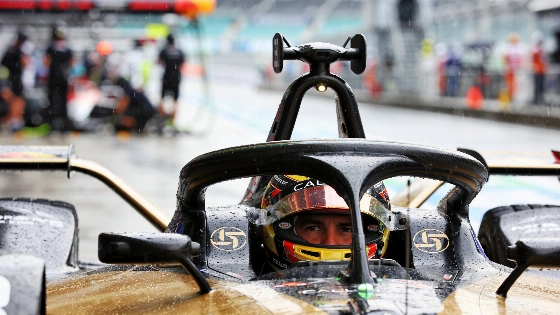
Sergio Pérez finished nineteenth in a chaotic Bahrain Grand Prix held at Sepang, Malaysia, where a safety car erased his gains as technical trouble compounded the effects of changing track conditions. His lead vanished when the field bunched up. The race took place in Malaysia, not the Middle East, after a rare calendar switch put drivers on one of Formula One’s trickiest tracks.
Pérez has six Grand Prix wins and has finished second in the world championship. He called this race “very tough.” Cadillac took a risk, expecting the track to dry quickly, but it didn’t. After the first lap, Pérez knew he was in trouble. “We thought the asphalt would dry much sooner than it did,” he said. “But after the first lap I realized it was really difficult to keep the car on track.”
Motorsport and PlanetF1 reported that heavy rain delayed the start by approximately 40 minutes. Multiple cars stopped on the formation lap, prompting a software update before the restart.
Switching to intermediate tyres gave Pérez a brief boost. The car felt better, and he began catching the cars ahead. For a few laps, the gamble worked: he pulled away from the pack as grip improved with the changing surface. Then the safety car bunched up the field, erasing his gains and forcing him to start over.
Technical problems made matters worse. “At the beginning, some cars had a software-related problem that affected their performance, and I understand the FIA is looking into it,” Pérez said. The FIA said the early chaos stemmed from a software bug triggered by low engine revs in wet conditions, with Sepang’s sector configuration also contributing. The issue had not been detected during testing or on the reconnaissance lap, and a full investigation involving teams and power unit manufacturers began after the event.
Fourteen years ago, Pérez reached the Sepang podium for the first time, finishing second behind Fernando Alonso in the rain. This time, the weather and the car worked against him. Sepang is known for wild weather and tricky strategy. As earlier reports noted, even champions like Alonso have struggled with the circuit’s changing grip and sudden storms.
Pérez is already in the future. “I’m sure we’ll learn from this and apply those lessons in the next races,” he said. The Sepang round showed how quickly conditions can change in Formula One, where teams and drivers must read the track and react on the spot.