Madrid police have broken up a violent youth gang cell after a stabbing left a 33-year-old Dominican man in intensive care for two months. A joint operation by the Policía Nacional and Policía Municipal led to the arrest of six men, aged 20 to 27, all linked to the Dominican Don’t Play gang.
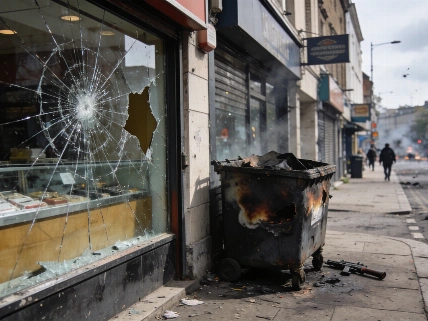
The investigation began after a targeted attack on February 20 in the Latina district. The victim was ambushed from behind with a large knife on Avenida del Padre Piquer, a popular nightlife spot for young people. The attacker and five others got out of a car and struck without warning, leaving the man critically injured. He survived after a long stay in intensive care at a Madrid hospital.
ABC reports that the suspects lived in different Madrid neighborhoods. Police kept them under surveillance throughout the nearly six-month investigation.
Police quickly identified the car used in the attack and tracked down its occupants: an Argentine, a Romanian, a Colombian and three Spaniards of Latin American descent. All were already known to the Madrid Information Brigade’s gang unit for previous violent and drug-related crimes. Authorities say the attack stemmed from an internal dispute within Dominican Don’t Play, amid the instability and rivalries that lead this kind of violence. ABC reports that the suspects face charges of grievous bodily harm, belonging to a criminal organization and drug trafficking.
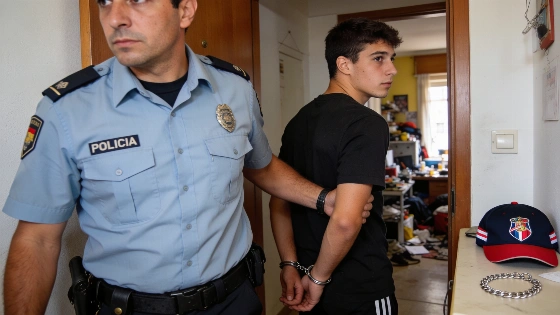
On August 11, officers carried out six simultaneous raids on the suspects’ homes. They found simulated firearms and large knives, as well as cash, mobile phones and multiple SIM cards. Officers also recovered items bearing gang symbols, including necklaces, clothing and internal rulebooks, along with various drugs. ABC reported that the operation spanned the six months between the February attack and the August arrests.
The case sheds light on the structure and reach of violent youth gangs in Madrid. Members from several national backgrounds belonged to the same gang cell, reflecting changes in organized youth crime across Spain’s cities. The attack targeted another gang member, a sign of internal power struggles that often spill into public violence.
Spanish media, including Antena 3, have reported a series of recent cases involving Latin American youth gangs in Madrid. The reports point to continued police pressure and a broader pattern of violence, the recruitment of minors and drug trafficking linked to these groups.
Madrid authorities have repeatedly warned about the growing influence of gangs like Dominican Don’t Play, which combine criminal activity with a culture of violence and strict internal codes. The gang paraphernalia and documents seized in the raids give investigators more understanding into recruitment, hierarchy and the groups’ operations. That information can inform prevention and intervention strategies in the city’s hardest-hit neighborhoods.
The arrests have taken this group off the streets, but violent youth gangs continue to adapt, drawing in young people from different backgrounds and exploiting social vulnerabilities. The latest arrests show police are acting decisively, while the persistence of these networks points to a deeper social issue beyond law enforcement. Without coordinated community work through education and social services, gang violence will remain a serious threat to safety in Madrid.