Six of the thirteen people who died in the Los Gallardos fire in Almería have been formally identified by the Civil and Instruction Section No. 3 of the Vera Court. The confirmed victims include two British nationals and a Belgian man. A French woman and an American woman were also identified, along with a Spanish man. The American woman was married to the Spanish victim, reflecting the international character of the community affected by the tragedy.
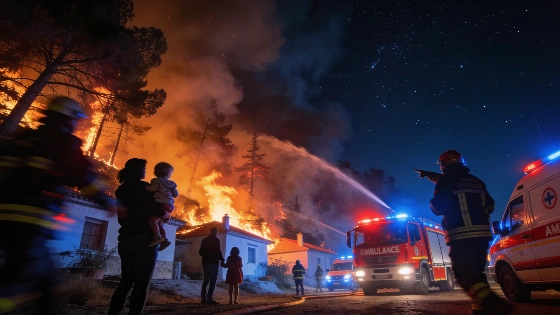
The wildfire began on 9 July 2026 and spread toward Bédar amid hot, dry conditions and strong winds. It burned approximately 7,000 hectares and forced more than 1,000 people to evacuate. The affected area is home to residents from the UK and Belgium, as well as communities in France, the US and Spain. Authorities gradually brought the fire under control and began allowing residents to return in phases, while the blaze's origin remained under investigation.
Identifying the remaining victims has been complicated by the condition of the remains, making genetic analysis basic to the process. The Guardia Civil’s forensic biology unit established genetic profiles for the deceased. Matching those profiles with relatives’ DNA depended in part on family members travelling from abroad. Consular authorities from Belgium and the United Kingdom assisted, as did officials from France.
One of the victims, Stanislas Verdonckt, a 63-year-old Belgian entrepreneur who had settled in Bédar, was among the first to be named. His son, Thomas-Wolf Verdonckt, a virologist living in Belgium, travelled to Spain to provide a DNA sample and file a missing-person report. Thomas-Wolf said his father and other residents “did not receive instructions to evacuate or remain sheltered,” challenging the official account that some victims had ignored advice to stay indoors. He recounted speaking to his father as the fire approached and described the group’s attempt to escape by road before the flames cut off a safe route.
At the time of the identification update, authorities had recorded 13 deaths. Eight bodies were found in a valley below the El Curato area near Bédar, where escape routes became inaccessible as the fire advanced. Later coverage raised the final toll to 15 as severely injured survivors died. Among them was a British woman, Lisa, who died 19 days after she and her husband Simon were rescued by four Guardia Civil officers. The most recent fatality in the initial account was a 93-year-old woman who died at Torrecárdenas University Hospital after suffering burns to 20% of her body. She survived the initial blaze but had pre-existing health conditions.
Authorities were also seeking information about at least 20 people whom relatives had been unable to contact. Nine disappearances had been officially reported, including two new cases filed by families. The court had received information about a seventh victim, but further analysis was needed to confirm the person’s identity. As DNA results became available, the identification process was expected to clarify the fate of those still unaccounted for.
Los Gallardos, near the tourist destinations of Mojácar and Garrucha, has a large expatriate community. The fire’s rapid spread and residents’ accounts of the warnings they received have brought emergency communication and evacuation procedures under scrutiny, particularly for international residents. The disaster also prompted local authorities to consider how municipalities coordinate large-scale emergency planning.
Several high-profile accidents in Spain in recent years have highlighted continuing challenges in emergency response and public safety. A recent serious road accident in Collado Villalba also underscored the importance of coordination among emergency services. The Los Gallardos tragedy has renewed attention to disaster preparedness, particularly in regions with diverse and international populations.
Families and authorities continued to await further results as Spanish officials worked with foreign consulates on the identifications. The fire also formed part of an exceptionally severe wildfire season in Andalusia. Regional reporting later recorded 59,685 hectares of forest burned across the region, more than seven times the annual average.