Iberian Lynx: 31 Cubs and Record-Breaking Success of the Rescue Program. In 2026, 31 Iberian lynx cubs were born at Spain’s El Acebuche and Zarza de Granadilla centers— the best result in recent years. The species recovery program is showing record effectiveness and offers hope for the predator’s return to the wild.
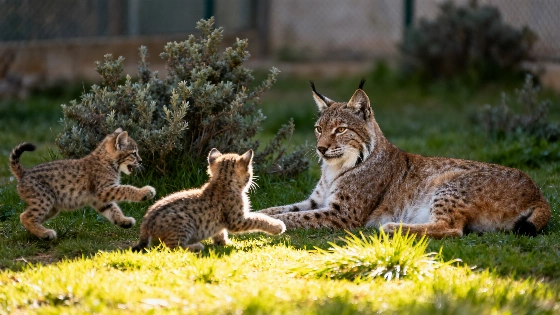
In 2026, Spain recorded one of the strongest results in the history of the Iberian lynx recovery program: in two key centers — El Acebuche (Doñana) and Zarza de Granadilla (Cáceres) — 31 cubs were born. These figures confirm that a species recently considered on the brink of extinction is confidently returning to the Iberian Peninsula.
In El Acebuche, 16 cubs were born across six litters, with the average number of kittens per female exceeding the usual — 2.7. In Zarza de Granadilla, 15 newborns were recorded, also in six litters. All cubs have already passed the critical first month of life, considered the most important stage for survival in captivity.
Record-breaking success
The main indicator of the season is an 86% breeding success rate: six out of seven females in both centers became pregnant. This is above the average of previous years and shows that husbandry conditions and breeding methods are improving. Particularly notable is the founding male Tintín, who sired offspring for the first time in several years, which is important for maintaining genetic diversity.
Two females became mothers for the first time and were able to raise their young on their own — an additional sign of population resilience for the program. In El Acebuche, five out of six litters contained triplets, while in Zarza de Granadilla, the female Taza gave birth to four cubs at once — the season's record.
How the program works
The ex situ program, launched in 2003, focuses on breeding the Iberian lynx outside its natural habitat followed by reintroduction into the wild. Over two decades, more than 300 cubs have been born in OAPN-managed centers, many of which have already been released into the wild in Andalusia, Castilla–La Mancha, Extremadura, Castile and León, Aragon, and Portugal.
Thanks to a combination of breeding, habitat improvement, and controlled animal release, the Iberian lynx has moved from being 'on the brink of extinction' to 'vulnerable' according to the International Union for Conservation of Nature classification. This is one of the most notable achievements of European rare species conservation programs.
What readers need to know
The recovery of the lynx is not only the result of specialists’ work, but also of ongoing monitoring, knowledge sharing between regions, and societal support. Keeping track of program dynamics and analyzing survival and reintroduction data is crucial to truly understanding how the situation with endangered species is changing.
By the way, interest in nature and environmental topics in Spain has been steadily growing: for example, recently we discussed how prices for beach vacations in Mallorca are changing in summer 2026 — and this too is part of the general trend of increased environmental awareness.
The importance of the 2026 season
This year's results consolidate El Acebuche and Zarza de Granadilla as key centres for the rescue of the Iberian lynx. The success of the programme lies not only in the numbers, but also in the fact that the species is returning to new regions of Spain and Portugal, while the experience gained serves as a model for other rare species conservation projects.
According to Talent24h, the current season has been one of the most successful in the programme's history. This gives hope that in the coming years the Iberian lynx will finally achieve the status of a fully restored species on the Iberian Peninsula.