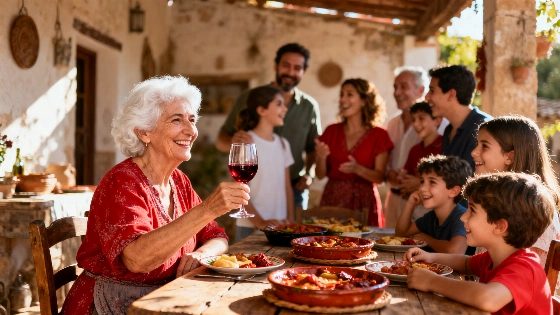
On July 29, Teresa Fernández Casado will turn 113 in the house in Zambroncinos del Páramo, León, where she was born in 1913. Recognized as Spain’s oldest living person, she continues to live close to her family and local community. People aged 110 or older are commonly known as supercentenarians, a rare key stage in human longevity.
Teresa’s daily routine has barely changed over the decades. She still enjoys a glass of wine with her meals, a habit her family says she has kept for as long as they can remember. On special occasions, she raises a toast with a small shot of herbal liqueur, surrounded by her children, grandchildren, great-grandchildren and great-great-grandchildren. Her family describes her appetite as strong and says she remains in good physical health and mentally sharp. Her memory has long made her a living archive for her village.
Family and Longevity
Teresa’s family is as extraordinary as her age. Of her nine children, six are still alive, including Ángel, who at 93 is believed to be the oldest Spaniard with a living mother. The family now spans five generations, with eleven grandchildren, nine great-grandchildren and two great-great-grandchildren. Teresa is described as a beloved figure in her community, known for her warmth and ability to recover.
Official Recognition
LongeviQuest, an international organization that tracks longevity claims and supercentenarian rankings, has recognized Teresa’s age. After Angelina Torres Vallbona died in November, Teresa was confirmed as Spain’s oldest living person. She now ranks among the ten oldest people in Europe and the top fifty worldwide. Such rankings rely on documented ages, making birth and identity records basic to validating exceptional longevity claims.
Health and Habits
Teresa’s family says she has rarely needed medication or medical treatment. When she was hospitalized two years ago, they recall that doctors struggled to find medical records for her. Her story comes amid Spain’s high national life expectancy: figures attributed to the Instituto Nacional de Estadística put life expectancy at birth in 2024 at 84.01 years overall, including 81.38 years for men and 86.53 for women. For people who had reached 65 that year, the corresponding average remaining life expectancy was 19.87 years for men and 23.64 for women. These population averages put her exceptional age in context, but cannot explain an individual’s longevity.
Teresa’s daily glass of wine has attracted attention, but a personal habit is not evidence that alcohol helps people live longer. The presence of antioxidants in red wine, sometimes cited in health discussions, does not establish that drinking wine provides a longevity benefit. Her family’s observations about her health and medication use are personal accounts, not clinical measurements. Her experience cannot show that wine or any other single habit caused her to reach 113.
Spain has had other widely known supercentenarians, including María Branyas, who died in 2024 at age 117. Research into exceptional longevity has examined factors such as genetics and lifestyle, but an individual case does not establish a universal formula. Teresa’s family, traditions and long connection to her village remain basic to the story of her life.