Thousands of migrants crossed into Ceuta on 30 July, overwhelming El Tarajal for hours. Off the coast, a Spanish patrol boat and a Moroccan vessel came close to colliding.
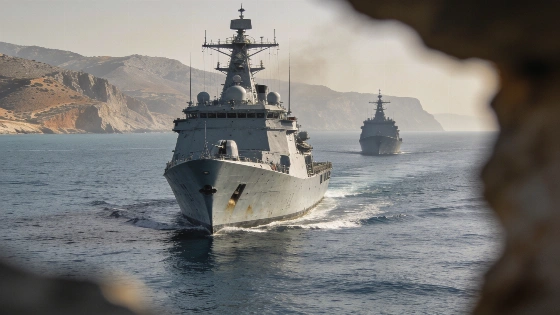
Spain’s Defence Ministry recorded at least one Moroccan frigate and several patrol boats in Spanish waters on 30 and 31 July, without permission. Reuters reported that Prime Minister Pedro Sánchez confirmed the entries and said a Spanish frigate had to lead the Moroccan vessels out of the disputed area.
Sources familiar with the incidents told El País that the entries were repeated and deliberate, not accidental passages. Sánchez confirmed the encounters in an informal conversation with journalists but did not explain why the vessels entered. He called those days exceptionally difficult and said senior-level contact had taken place between the two countries’ armed forces. Yabiladi reported that the maritime boundary is disputed: Spain regards the waters around Ceuta within 12 nautical miles as territorial, while Morocco does not recognise Spanish sovereignty over Ceuta or its adjacent waters.
Yabiladi also reported that Morocco does not recognise Spanish sovereignty over Melilla.
The timing is clear; any link between the naval movements and the migrant influx is not. Arrivals through El Tarajal overwhelmed Ceuta’s operational capacity for hours. The reported figure for arrivals is 70,000. Reuters cited an estimate of more than 72,000 border crossings in late July; neither 70,000 nor 80,000 is identified as an official figure for this episode.
Madrid mayor José Luis Martínez-Almeida later referred to 80,000 people and questioned whether Moroccan authorities could have been unaware of, or uninvolved in, their passage. That was his claim, not a government finding.
Whether the vessel movements were coordinated with the migrant influx remains unanswered. Spain’s Defence Ministry declined to comment on the question. A police report sent to the Audiencia Nacional in September said Moroccan agents planned and guided the entry. The Interior Ministry, led by Fernando Grande Marlaska, says there is still no evidence establishing Rabat’s authorship.
El Nacional reported an earlier statement from Sánchez that Spain’s intelligence services had no information confirming Moroccan authorities’ involvement in the mass crossings. That claim concerns the migration influx, not the separately confirmed naval entries.
Ceuta’s president, Juan Jesús Vivas, said he had asked the central government for help days before the arrivals and argued that preventive measures were not taken. A separate Ceuta report described the later clearance of El Guano, the enclave’s last major migrant camp.
Spanish media reports said the incursions continued into the first days of August. Spain then increased its naval presence and held high-level contacts with Rabat. ElPlural and Teleceuta reported that the Moroccan vessels stopped entering after those steps. El Nacional reported that Spain first sent the maritime action vessel BAM Rayo, which arrived off Ceuta on 3 August. Frigates Santa María and Navarra were then assigned to observation and deterrence, taking the response beyond routine border patrols.
Morocco’s Ksar Sghir naval base lies near Tangier, at the Strait of Gibraltar’s narrowest point. Designed to accommodate Sigma- and Fremm-class frigates, the base is close to the basic maritime passage. Reports have also said Rabat was in talks with the Trump administration about hosting US ships there, potentially as an alternative to Rota. Those reports describe discussions, not a completed arrangement.