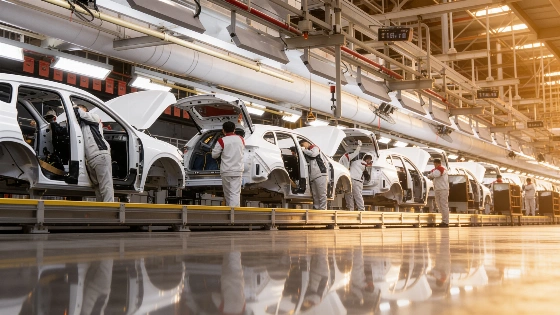
Spain’s 24-hour general strike began at midnight on 11 November 2026, with demands over wages and housing affordability, alongside public services. Reuters described it as the country’s first general strike in 14 years, staged several weeks before a snap general election. El Debate reported that Matías Carnero (UGT), president of Seat's works council at Martorell, said the night shift had recorded 100% participation in the strike. Volkswagen's Navarra plant also did not begin normal operations, while some factories cancelled shifts to head off supply and logistics problems. UGT and CCOO said early stoppages in the automotive sector reached up to 90%; the figure described the opening phase of the strike.
Factories across Spain saw different levels of disruption. Some kept to their regular shifts: sources at Stellantis and Renault in Spain told El Debate that their plants had not stopped. The sites named were Vigo, Figueruelas and Villaverde, as well as Palencia and Valladolid. Reports of complete stoppages at Volkswagen Navarra and SEAT’s Barcelona-area facilities accompanied the unions’ sector-wide participation estimate.
Components were another vulnerability. The report said some parts plants were affected, potentially disrupting deliveries to vehicle factories. It also cited public-transport problems that kept workers from reaching plants; a separate C-17 road-safety report concerned enforcement on the road rather than factory access. Before the strike, UGT and CCOO projected that around 350,000 workers in vehicle manufacturing and supplier companies could be affected. Worker representatives at SEAT, Stellantis, Renault, Mercedes-Benz, Ebro, Horse Powertrain, Iveco, Nissan and Volkswagen had expressed support for the action.
Spain's car factories operate between 220 and 230 days a year, depending on demand. The figures cited in the report put daily output at about 8,000 cars, rising to around 10,000 when vans and industrial vehicles are included. Annual production was given as 1.8 million cars, or 2.2 million with commercial and industrial vehicles. ANFAC figures put 2025 production at 2,274,026 vehicles, including 1,810,331 passenger cars and 463,695 commercial and industrial vehicles, down 4.3% from 2024. Exports totaled 1,950,103 vehicles, an 8.2% annual decline; about 85.8% of production was exported, and Europe accounted for 92.6% of those exports.
When the report was published, the strike's overall effect on production remained unclear. It said plants could make up for missed output on other shifts, and that stoppages could be used for previously scheduled maintenance. That was an expectation, not a confirmed calculation of the day's production loss. The unions’ early participation estimate was not a final tally of vehicles lost, and no plant-by-plant production-loss figure accompanied it.