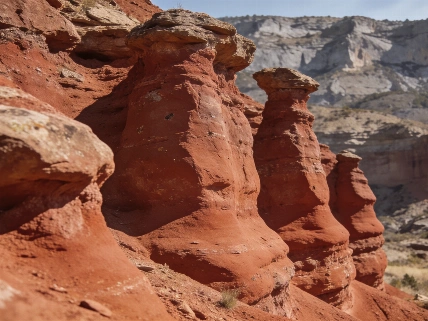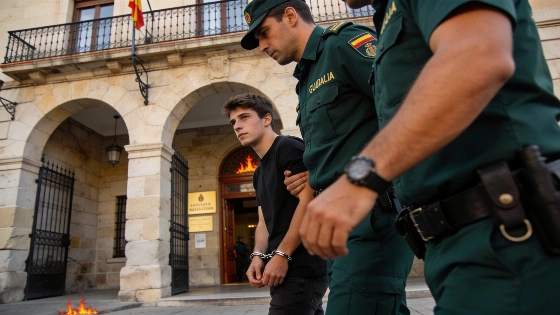
The wildfire near Peñas de Riglos in Huesca began on 10 August 2026 close to Santa María de la Peña and roadworks on the A-132, then spread rapidly through extensive pine woodland. On 12 August, the Guardia Civil arrested a 28-year-old man investigated in connection with the suspected ignition. Two days later, a judge ordered provisional custody without bail. The Guardia Civil’s Servicio de Protección de la Naturaleza (Seprona) led the investigation, with support from its Basic Environmental Operations Unit in Madrid.
Investigators examined the man’s connection to the A-132 road project and reviewed security-camera images that placed him near the area identified as the fire’s origin. This evidence formed part of the case that led to his arrest and the initial request for pre-trial detention; it did not establish guilt. Reports put the area burned during the fire’s active phase at more than 11,200 hectares. Later mapping gave a higher figure: 7,012.26 hectares in Las Peñas de Riglos, or 43.06% of the total, and 4,996.67 hectares in Bailo, or 30.68%. Together, the two municipalities accounted for more than 12,000 hectares, information from figures reported by Aragón Digital.
Unpredictable weather complicated containment efforts. A thunderstorm early one afternoon contributed to erratic fire behavior, hampering firefighting operations and raising risks for nearby communities. Emergency teams prioritized protecting the two historic San Juan de la Peña monasteries and Santa Cruz de la Serós. The monastery buildings were not reported to have suffered total destruction, although later reports said the forest around both the Nuevo and Viejo monasteries was affected.
Authorities evacuated 1,046 people from 19 population centers, as well as people from two campsites and one camp. The evacuations included Atarés, Anzánigo and a camp hosting 19 children and five adults, also to Villalangua, Salinas de Jaca, Ena, Centenero, Santa María de la Peña, Triste, La Peña Estación, Yeste, Bailo, Larués, Arbués, Alastuey, Botaya, Osia, Santa Cruz de la Serós and Binacua. The scale of the evacuations reflected the fire’s rapid spread and the danger to communities across the area.
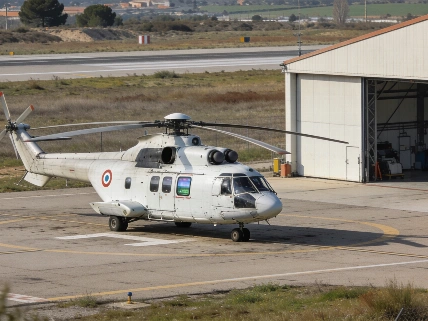
During the emergency, the Government of Aragón reported that the fire’s right flank, particularly sectors 2 and 4, remained the most active, while erratic winds altered its spread in sectors 5 and 6. Sectors 1 and 3, along with parts of sector 5 on the left flank, showed signs of improvement. The fire also disrupted access to the San Juan de la Peña area. The A-1603 road remained closed after the immediate fire threat had passed because burned vegetation and unstable slopes raised concerns about falling rocks and landslides. It reopened on 23 October, after the regional road authority assessed and secured hazardous areas through stabilization work.
The suspect’s legal status later changed. The Audiencia Provincial de Huesca ordered his release, and he was subsequently placed at liberty under precautionary measures. In September, the Government of Aragón asked the Jaca court to return him to prison or, alternatively, set bail at €100,000. The court rejected the request and maintained his conditional liberty. The criminal investigation into the fire remained separate from a proceeding concerning the alleged disclosure of judicial information by the regional government. In October, the Jaca court archived that separate inquiry, concluding that “there is no evidence that the success of the investigation has been endangered, nor that the privacy of the suspect or their relatives has been affected or that they have been put in danger.” The decision did not resolve responsibility for the fire, which remained under investigation.
The incident echoes other cases in Spain in which suspected arson has led to evacuations and extensive environmental damage. In León, for example, a suspect was linked to a wildfire that forced the evacuation of several villages and burned large areas, as detailed in a previous report on a major wildfire in León.
Wildfires recur each summer in Spain, where high temperatures and dry conditions can raise the risk of rapid spread. The Peñas de Riglos fire displaced more than a thousand people, disrupted access to a impressive cultural heritage area and left slopes and vegetation requiring safety assessments after the flames had passed. The investigation into its origin and efforts to address the fire’s continuing effects have proceeded on separate tracks.