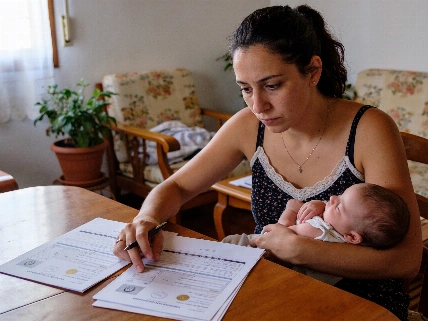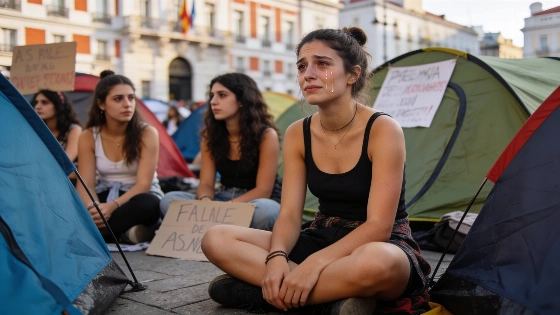
Madrid’s Puerta del Sol has become a camp for young protesters angry about the housing crisis. Dani, 24, stood among tents and protest banners. Her voice cracked: “I want to be a mother and I don’t think I can.” Her words capture what many young people feel: the dream of a stable home is slipping away.
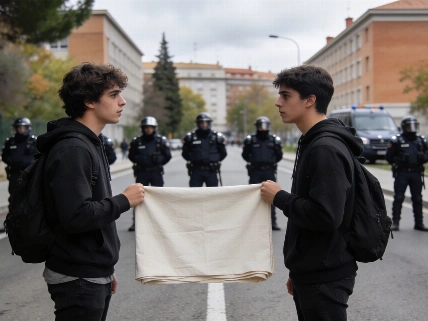
This is no party. The Sindicato de Inquilinas organized the protest as a direct challenge. Most people in the crowd are young, and many are women. They have steady jobs, but the numbers don’t add up. They face insecure work and harsh rental contracts, with eviction looming. Lucía and Claudia both earn 1,400 euros a month, yet say a decent home is out of reach. Maga, who moved from Ecuador three years ago, says migrants are even more exposed. For them, housing feels out of reach altogether.
Authorities estimated the initial march at around 25,000 people, while organizers claimed that over 300,000 took part, AP reported.
Joan, 26, has stopped dreaming of living alone or with a partner. He now shares a flat with three others; that’s the only way he can afford it. Many share his sense of abandonment. Protesters say the government has left them defenseless, while a small group profits from the housing crunch.
This movement differs from the old 15-M protests. The camp is organized, and the demands are clear. No one here wants empty promises. The message is blunt: the crisis is no distant idea. It is real, disrupting family plans and hopes for stability.
Sol is now the center of the fight. Earlier reports showed the square filling with tents and anger. The protest has grown, and the housing emergency is now impossible to ignore. The mood is serious. It’s no longer a private struggle.
Reuters and data from the Bank of Spain show that the country faces a housing deficit of 750,000 homes, projected to surpass 1 million by 2028. The crisis is especially severe in Madrid and Barcelona, with Valencia also facing acute pressure on the rental market.
Young people in Spain now face a hard choice: survival or dignity. Many blame the government for doing too little. The voices in Puerta del Sol demand help and recognition. If these stories go unheard, the damage will run deep and trust in the system will break. The cost will be more than lost chances. It will be a lost generation.