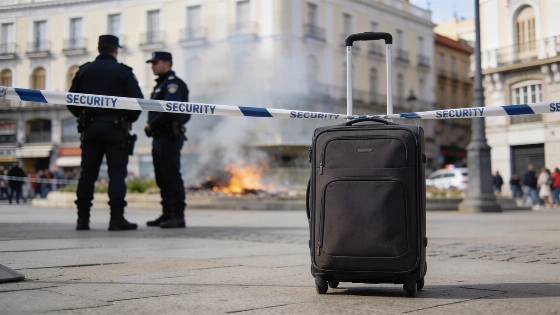
The Guardia Civil kept the area cordoned off from 16:00 while TEDAX assessed whether the alert posed a genuine risk.
At 20:45, bomb-disposal officers carried out a controlled blast near the Dehesa de Abajo, EL ESPAÑOL reported. The bag was beside the Shell petrol station, next to the Supercor. It contained no explosives. The Guardia Civil had also evacuated the DIA supermarket.
The alerts came amid a wave of false bomb warnings across Europe. In Italy, around 6,000 schools received a threatening email, according to Education Ministry sources cited by ANSA; other reports put the number at about 6,300 institutions. Education Minister Giuseppe Valditara said 312 schools had been evacuated. More schools received the message than were evacuated, as local authorities made evacuation decisions and police checked individual institutions. The email, received at about 9:50 a.m., claimed that remotely detonated devices had been placed in school buildings. Inspections had not found explosives when the reports were published.
Italian Prime Minister Giorgia Meloni said authorities had found no indication of a concrete danger. She convened a meeting with security and intelligence chiefs on 11 November as precautionary checks continued. The warnings nevertheless prompted evacuations and disrupted classes. EFE reported that parents gathered outside schools in Rome as students left. Some were visibly upset and called their families to arrange where to meet. Authorities expected schools to reopen normally on 12 November.
At the Liceo Talete and Terenzio Mamiani, students were among those leaving school amid the disruption. EFE also observed students at the Luigi Einaudi institute. Some reunited with relatives, while others celebrated the unexpected suspension of classes.
The report described the Italian alerts as the second mass episode in November. Earlier in the month, threatening messages sent to more than 270 school principals had led to class suspensions and police inspections at dozens of institutes. ANSA reported that the earlier messages reached about 280 principals. Police were seeking to trace the messages and identify their senders. RUSSPAIN has separately covered an Oviedo police incident.