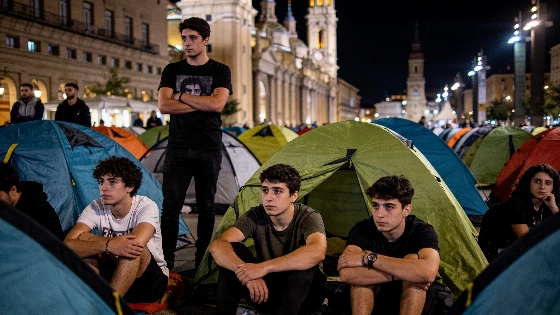
Nearly a hundred young protesters, most under thirty, spent a restless night in tents at Zaragoza’s Plaza de España, where many said they felt threatened. Verbal abuse from passersby kept tensions high, and few managed much sleep in the more than forty tents.
The Sindicato de Inquilinas set up the camp to draw attention to the city’s worsening housing crisis: high rents and young people’s difficulty finding stable places to live. On Thursday afternoon, the group pitched its tents and turned the plaza into a protest site. Organizers say the camp will run through Saturday’s demonstration. Spanish media reported that it began on October 1, after a noisy cacerolada, when about 25 to 30 tents went up. Protesters say they plan to keep the camp in place through Saturday’s march.
The protest is linked to the eviction of Maricarmen, which local media and activists describe as a turning point for Zaragoza’s housing movement. Exhaustion set in inside the camp, and the constant sense of risk made it hard to relax. Choosing such a public spot was not easy, but organizers believe a visible, collective stand is needed to get city leaders’ attention. The Sindicato de Inquilinas de Zaragoza said the action aims to put the housing crisis in plain sight and build momentum for Saturday’s protest.
Similar protests have taken place in other Spanish cities, as housing becomes a rallying point for young activists across the country. The group chose the busy, basic Plaza de España to make its struggle visible. National media have described the Zaragoza camp as part of a wider wave of tent protests for housing rights. Pressure is mounting on officials and the rental market, while protest camps have become a regular feature of Spain’s housing debate.
Before the tent camp, Zaragoza saw assemblies and poster-making workshops, with mobilization meetings filling out the week. El Periódico de Aragón described the campaign as a week-long sequence of actions rather than a single protest event.
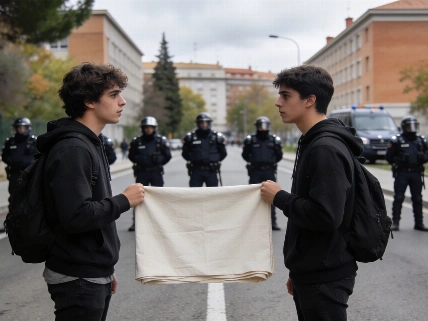
Protesters say they have been confronted and made to feel unsafe. The group refuses to back down despite the risks of public protest. They are tired, but they are staying.
For many young people, finding a place to live is about more than money: they want to be seen and feel safe in the city they are trying to claim. The protesters spent a difficult night outside and say they are done waiting.