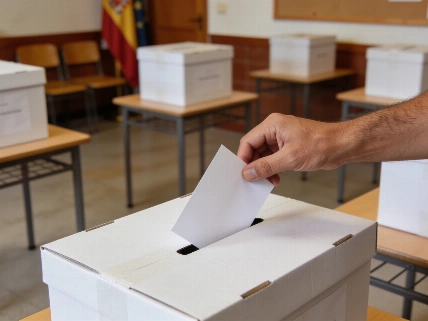
Spanish King Speaks Out Against European Division Amid Rise of Right-Wing Forces. Felipe VI emphasized the importance of European unity and the role of regions in addressing challenges. The awarding of the Charles V Prize took place in Extremadura against the backdrop of political debates over national priorities.
The ceremony for the European Carlos V Award took place at the Monastery of San Jerónimo de Yuste in Extremadura, where King Felipe VI emphasized the importance of maintaining European unity. The monarch noted that the diversity of European countries is not a reason for division but a source of strength, especially amid the growing influence of right-wing and anti-European movements.
This year, the award was presented to the Committee of the Regions of the European Union for its contribution to the development of the energy transition, sustainable urban planning, and the fight against rural depopulation. Felipe VI stressed that it is precisely regional and local authorities who are best positioned to effectively respond to key challenges such as an aging population and support for agriculture.
The ceremony was attended by the heads of the Extremadura and Andalusia regions—María Guardiola and Juan Manuel Moreno Bonilla. Both politicians from the People’s Party found themselves in the spotlight due to the need to cooperate with the VOX party to form regional governments. In Extremadura, Guardiola agreed to VOX’s demands to introduce a 'national priority' in the distribution of aid, which sparked debate over whether such measures comply with European principles.
Among the guests were the Minister of Foreign Affairs, José Manuel Albares, and the Vice President of the European Commission, Teresa Ribera. Former Foreign Minister José Manuel García-Margallo stated during the ceremony that diplomacy is giving way to forceful methods, and that Europe must strengthen its own defense industry amid changes in global politics.
The President of the European Committee of the Regions, Kata Tutto, who received the award from the king’s hands, also spoke in defense of European institutions and emphasized that Europe’s strength lies not in eliminating differences, but in the ability to coexist with them. She highlighted the danger of 'emotional tribalism' and the oversimplification of debates on social media, urging leaders to maintain democratic and social balance.
Spain was cited as an example of lasting solidarity between regions, which, according to Tutto, has become not a temporary phenomenon but a structural feature of the country. It is important to note that issues of regional balance and national priorities are becoming increasingly relevant against the backdrop of political changes in Spain and Europe. Similar disputes over symbols and values have already arisen in other regions of the country, as was the case with the cancellation of the ceremony in Cádiz after the publication of court documents, as previously reported by russpain.com.
For reference: The European Committee of the Regions is an EU advisory body that brings together representatives of local and regional authorities. Its mission is to ensure that the interests of territories are taken into account when shaping pan-European policy. The Carlo V Prize is awarded for contributions to the integration and development of Europe. In recent years, issues of regional balance and national priorities have become particularly significant against the backdrop of migration processes and political changes in the EU.