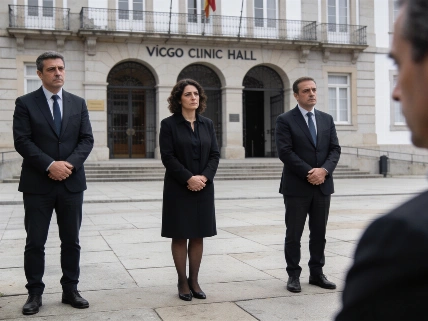
The devastating flood that struck Valencia on October 29, 2024, killed hundreds and continues to raise questions about the official response. Later commemorative reports and victims’ associations put the toll at 233 fatalities in the province of Valencia. New testimony from the driver of Salomé Pradas, then the regional minister responsible for Justice and Interior, has renewed attention to the decisions made that day and the atmosphere inside the crisis command.
In statements before the investigating judge in Catarroja, the driver described chaotic scenes as he transported Pradas across the region. He recalled encountering a tornado shortly after it had passed, with roofs torn from buildings, then following emergency vehicles into the hardest-hit areas. He picked up Pradas at 8:00 a.m. from the Palau de la Generalitat; the day would not end until midnight.
After a Consell meeting at which Pradas warned President Carlos Mazón about the risk of flooding, the driver took her to the 112 Emergency Center in L’Eliana. The center received nearly 20,000 calls for help during the disaster. At 2:00 p.m., they traveled to Carlet, a municipality devastated by floodwaters, following fire and police units as the situation unfolded.
The testimony also highlighted the timing of the mass alert. The ES-Alert mobile notification went out at 20:11, after catastrophic flooding had already begun in several municipalities south of Valencia. By then, many people later reported missing were already presumed dead. The timing is basic to the judicial investigation into whether regional emergency authorities should have authorized a warning earlier. On the return to L’Eliana, where crisis coordination was underway, the driver recounted encountering another tornado and seeing building structures airborne.
Representatives from more than twenty institutions gathered inside Cecopi, the Integrated Operational Coordination Centre, to manage the emergency. The driver received distressing videos from Paiporta, where 55 people lost their lives and where he had family. He was uncertain about Pradas’s actions during this period and could not confirm whether she was making calls or expressing concern. Congressional testimony by Christian Lesaec placed the first arrival of floodwaters in Paiporta at about 19:12, with severe flooding hitting Benetússer and Catarroja, then Alfafar and Sedaví, at around 19:40. Lesaec told the congressional investigative commission that a warning from Cecopi at 5:00 p.m. could have given residents roughly two hours to reach safety. That was his assessment, not a judicial finding on causation.
The driver said he did not see Mazón’s driver enter Cecopi. Mazón himself arrived at 20:28, 17 minutes after the ES-Alert was issued, following a lengthy lunch and a walk in Valencia. The day ended with the driver dropping Pradas at a hotel in the city, as confirmed in court. Victims’ associations have since commemorated the dead at Paiporta’s barranco, which they describe as the disaster’s “ground zero,” and called for political and judicial accountability.
The judicial investigation, led by Catarroja investigating judge Nuria Ruiz Tobarra, is examining decisions by basic officials, with particular attention to alert timing and coordination between agencies. Since March 2025, Pradas and former emergency director Emilio Argüeso have been under investigation over alleged negligent homicide and injury offenses. Pradas has denied responsibility for operational decisions, saying technical personnel made them. She has also said she held no authority within Cecopi and argued that no one should be under investigation. In a report published by El País, the regional high court’s rejection of placing Mazón under investigation was described as resting on “suspicions and conjecture.” That decision did not determine whether the regional emergency response was timely enough.
The 2024 disaster has sharpened public scrutiny of emergency communication and coordination. Victims’ groups have contrasted the response with later storm management, pointing to earlier warnings and coordination as measures they believe can reduce casualties. The case continues to examine regional officials’ responsibilities and the decisions surrounding the 20:11 alert.