Christophe Périllat says autonomous cars need not carry €100,000 in roof-mounted sensors. His argument rests on AI learning to respond to situations that developers cannot anticipate in advance.
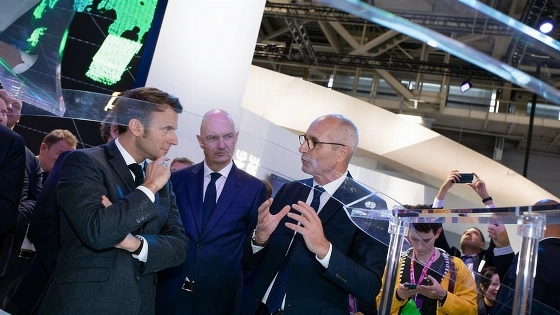
Christophe Périllat argues that AI could teach cars to handle road situations that developers did not anticipate when writing driving code. In an interview with Automotive News, the Valeo chief executive challenged the assumption that autonomy requires costly roof-mounted lidar. Developers cannot write a separate piece of code for every possible road scenario, he says. Instead, systems must learn traffic rules and road conventions, including what counts as acceptable behavior, from data.
His price comparison is striking: Périllat says cars can be autonomous without “100.000 euros en sensores sobre el techo”. The €100,000 figure is his comparison with large sensor packages associated with some autonomous prototypes and robotaxis, not a standardized production-system price. Périllat also forecasts that autonomous driving could become widespread within 10 to 15 years, rather than remaining limited to robotaxis. His argument is not an announcement that Valeo has abandoned lidar or a claim that camera-led driving has already matched lidar-equipped systems on safety or reliability.
The divide is about more than hardware. Cameras interpret visual data to identify objects and read road geometry, then infer depth. Lidar directly measures distance and creates three-dimensional information about the environment. Périllat says driving also depends on learning traffic rules and habits. Writing code for every possible situation is a dead end, he argues: a driver may encounter a scenario no programmer has anticipated.
Elon Musk is a prominent advocate of that approach. Tesla has promoted Full Self-Driving (FSD) for years as a highly automated system relying on cameras and sensors integrated into the car, rather than a roof-mounted lidar unit. Tesla Autopilot and Full Self-Driving are classified as SAE Level 2 systems: they assist with steering and speed control but require the driver to supervise continuously. Most other autonomous-driving projects described in the source combine cameras with at least one lidar sensor.
For drivers, the distinction is practical: reducing sensor costs would matter only if the system could make dependable decisions in unfamiliar situations. A separate example of a model taking a different route back into Spain is the GR86’s Spanish circuit return, though that story concerns motorsport rather than autonomous technology.
The unresolved issue is whether AI can make the right decision when the road presents a situation it has not met before. In the interview coverage, Périllat forecast that autonomous cars could become commonplace within 10 to 15 years. The engineering debate continues to weigh camera-based perception against lidar and other sensor combinations.