
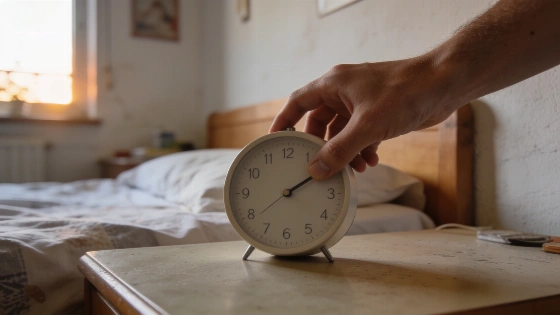
Sleep specialists favour keeping winter time, when morning light is more useful to the body. They recommend shifting daily routines by 15 minutes before the clock change and say seasonal switches should end.
A 2019 European Parliament vote to end seasonal clock changes did not resolve the issue: disagreement over whether to keep summer or winter time stalled the measure. Sleep specialists cited in the report favour ending the switches, which can disrupt sleep and leave people tired during the day.
The body’s sleep-wake rhythm helps explain why winter time may be easier to adapt to. Francesc Segarra, clinical director of the sleep clinic of doctor Eduard Estivill, says it runs on a cycle of about 24.6 hours, not exactly 24.
Without time cues, Segarra explains, people would tend to go to bed and wake up around 0.6 hours later each day. When clocks move back, the resulting day is almost 25 hours, closer to that natural rhythm. Moving clocks forward in spring can make it harder to fall asleep: someone used to going to bed at midnight may find their body still responding as if it were 11pm.
Morning light and sleep
Winter time also makes better use of morning light, Segarra says. Many people prefer summer time because evenings stay brighter, leaving more time to socialise after work. Eduard Estivill told La Vanguardia that this can come at the cost of sleep: people stay up later but still get up at the same time.
Spanish work and dining schedules can contribute to that pattern, Estivill argues. He contrasts them with routines in France and the United Kingdom, where he says people may eat earlier and go to bed around 10pm or 11pm before rising at 6am. He describes a similar pattern in the United States.
Who may feel the change
Segarra says people may feel tired or have difficulty concentrating during the day after a clock change. Young children can be particularly affected because their meal routines are fixed; their hunger may not match the new time for eating.
Older people may also find the shift harder. The same may be true for those who already tend to sleep poorly, Estivill says.
To ease the adjustment, Estivill recommends moving routines gradually by 15 minutes a day, starting three or four days before the new time takes effect. He supports keeping one time throughout the year, as China does.
The European Parliament’s 2019 vote followed a public consultation in which 84% favoured ending the clock changes. Countries in the north have tended to favour winter time to align clocks with morning light, while some eastern countries prefer summer time to avoid earlier sunsets. Disagreement over which time to adopt left the proposed change stalled.