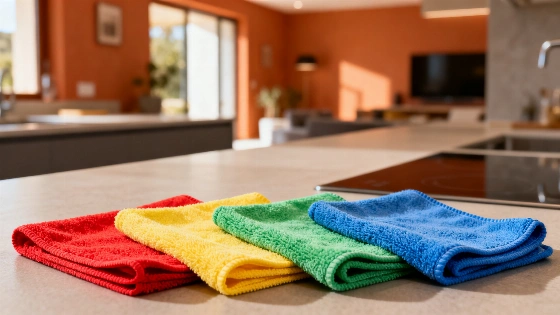
Reaching for a cleaning cloth is a daily habit in most Spanish homes, but few people stop to consider why these cloths come in so many colors. Cleaning specialists say color-coding goes beyond aesthetics: it keeps cloths assigned to different household tasks and reduces accidental reuse between areas.
Microfiber cloths are used on everything from kitchen counters to bathroom sinks. Color alone does not make a cloth cleaner or safer. It serves as a visual reminder of where the cloth should be used. A household might assign red to the bathroom, green to the kitchen, yellow to windows and blue to furniture. The impressive distinction is the cleaning task: a cloth used on a floor or greasy surface should not end up in the stack for glass or food-preparation areas.
How Color-Coding Works
A consistent color system makes it easier for everyone in the household to identify the right cloth, even when several people share cleaning duties. Labels, dedicated shelves or separate containers can reinforce the system and make it less dependent on memory. The system is voluntary: there is no universal household rule assigning a particular color to each room. Families can choose their own code as long as they apply it consistently.
Cleaning experts at Ecodomis note that color indicates a cloth’s intended purpose. Product guidance also treats color as an identification aid, not a measure of a cloth’s material or hygiene. The same principle applies to reusable mop pads: separate items information from the surfaces they clean, and follow each product’s care instructions.
Preventing Cross-Contamination
Using one cloth in both the bathroom and kitchen can carry soil and residues from one area to another. Color-coding helps reduce that risk by making each cloth’s assigned use visible, but it does not replace proper cleaning or laundering. Keep cloths used for food spills or raw-food juices, along with those used for heavily soiled work, separate from clean textiles until they are washed.
Maintaining the system is simple, but everyone in the household needs to follow the agreed-upon code. If color assignments change frequently or are ignored, the visual reminder loses its value. As cleaning and laundry guidance puts it, “Wash by the cleaning use and product guidance, not just by color.”
A Practical Example: A Consistent Color-Coding System
Many Spanish households use a simple color-coding system to organize their microfiber cloths:
- Red: bathroom fixtures and toilets
- Yellow: windows and glass surfaces
- Green: kitchen surfaces
- Blue: general furniture and other areas
This is one possible arrangement, not a universal standard. The colors themselves do not make cloths more effective; the benefit is that a clear, consistent system helps prevent mix-ups. A cloth used on a floor, for example, should stay separate from one intended for glass, polished surfaces or electronics.
After use, keep cloths apart until laundering, wash them according to their care labels, and let them dry completely before storing them in a clean, dry place. Microfiber is best washed separately from cotton towels and other lint-producing fabrics, since lint can cling to the fibers and affect how they work on glass or polished surfaces. Avoid fabric softener, which can coat microfiber and reduce its ability to pick up dust and water. Do not exceed the temperature specified by the manufacturer. Color-coding supports good cleaning habits, but it cannot replace proper washing, drying and storage.
Cleaning experts recommend washing microfiber cloths regularly and replacing them when they begin to wear out. Keeping each cloth in its assigned category, from use through laundry and storage, makes the system easier to follow and helps limit accidental cross-use at home.