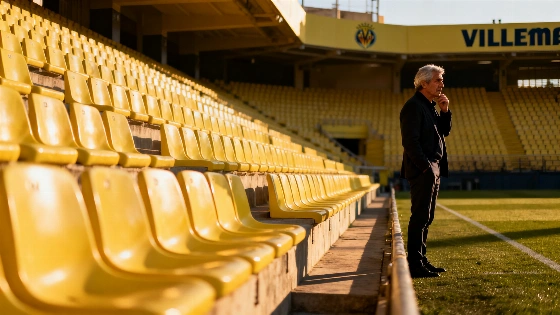
Villarreal and Marcelino to Part Ways After Historic Season. Villarreal has officially announced its split with Marcelino at the end of the season. The club is qualifying for the Champions League for the second consecutive year, but the parties failed to reach an agreement about the future. The decision was made in advance and is the result of disagreements over the project.
Villarreal has confirmed that head coach Marcelino will leave the club at the end of the current season. Despite the team securing a Champions League spot for the second consecutive year—a first in the club's history—the parties were unable to agree on the terms of continuing cooperation. The decision to part ways was made in advance and did not come as a surprise to the inner circle.
The question of Marcelino's future was discussed even before the winter break. The Villarreal management offered the coach a one-year contract extension, but this proposal did not satisfy the specialist. Subsequent negotiations with Marcelino's representative, Manuel García Quilón, also failed to reach a compromise. The parties did not even discuss financial details—the disagreements were solely about the club's development concept and the coach's role in the long-term perspective.
Different visions for the project
Marcelino insisted on the need for clear support from the management and long-term trust to maintain his authority in the locker room and ensure the stability of the project. At the same time, Villarreal was not ready to make long-term plans with the current coach. The club is focused on reducing expenses in future transfers and strengthening the role of its own academy, which did not fully align with Marcelino's vision. The management feared that, in the long run, this could lead to a repeat of past conflicts.
Despite their successful performance in La Liga, where the team qualified for the Champions League twice in a row, the club also took into account less impressive results in European competitions and the lack of victories over championship leaders. According to Villarreal, these factors meant there was not full harmony between the coach and the club's development strategy.
A departure without scandal
Unlike Marcelino’s first dismissal, which was marked by conflict, this separation is unfolding peacefully. Both parties accepted the inevitability of this outcome in advance and focused on achieving the season’s goals. As a result, Villarreal is ending one of the best seasons in its history, and the coach leaves with maximum respect.
Marcelino will finish his second spell at Villarreal with a record number of matches managed — 298 official games, with 145 of them ending in victory. He has become the most successful coach in the club’s history by this measure, surpassing Manuel Pellegrini. Under Marcelino, the team reached the semi-finals of the Copa del Rey and the Europa League, and returned to La Liga in 2013. Despite not winning trophies, his contribution to Villarreal’s development is acknowledged by both fans and the management.
Context and comparisons
The situation with Villarreal and Marcelino is reminiscent of other high-profile separations in Spanish football, where even successful seasons do not guarantee long-term cooperation. There is continued attention to the internal processes of clubs and their strategies, especially against the backdrop of other major events in the country. For example, a recent court case in Barcelona concerning the Pujol family concluded, with a spotlight on the business activities of the son of Catalonia's former president — you can read more about this in the article on the course of the trial and its outcomes.